Showing posts with label hybrid G Types. Show all posts

THE GAME in Pictures: Rugby Union + American Football Hybrid

Rugby Union-American Football Hybrid

Cleveland Browns & New Zealand All Blacks vs. San Francisco 49’ers & Australia Wallabies

During a 2009 Hybrid GAME matchup, the New Zealand All-Blacks’ hooker Keven Mealamu (center) breaks through the first line followed closely by Cleveland Browns running back Jamal Lewis (#31) as Australia Wallabies’ fly-half/inside centre Berrick Barnes (#12) and 49’ers' linebacker Patrick Willis (#52) close in to make the tackles.

Hybrid Nodes: Usain Bolt vs. Chris Johnson in the Context of THE GAME

Usain BoltChris Johnson


Updated 5/15/10

For a moment, it looked like this race would happen. But, apparently  a disagreement over the distance killed the proposed race between Jamaican Olympic sprinter and multiple world record holder Usain Bolt and Tennessee Titans running back Chris Johnson to determine the world’s fastest human; Johnson wanted to run 60 yards or less and Bolt wanted to run a longer race.

Bolt won three gold medals at the 2008 Summer Olympics in Beijing, setting world records in the 100 meters and 200 meters and sharing a third world record with the Jamaican 4x100 meter relay team. At last year's world championships, he shattered both of his own sprinting world records, running the 100 meters in 9.58 seconds and the 200 meters in 19.19 seconds. Bolt is widely considered the fastest man in the world…

Watch Usain run really fast.

Chris Johnson begs to differ.

During 2009, Johnson became the NFL's sixth 2,000-yard rusher when he completed his season with 2,006, breaking Earl Campbell's franchise record of 1,934. The second-year back from East Carolina also broke Marshall Faulk's NFL single-season record with 2,254 total yards from scrimmage.

At the 2008 NFL scouting combine, Johnson was timed in the 40 yard dash at 4.24 seconds -- the fastest time clocked at the combine that year.

Jimson Lee wrote a very interesting article in SpeedEndurance.com comparing the different physical demands of a 40 yard dash versus a 100 meter sprint and how one cannot just look at a sprinter’s split time to extrapolate their 40 time. Lee explains:

“In the 100m, you accelerate as long as possible to reach top speed, then maintain top speed. You want to cover the distance in the shortest possible time.

The 40 yard dash is similar:  your goal is to get to the 40 yard line as fast as possible from a motionless position. You have to overcome inertia, then reach top speed as fast as possible.

The “problem” is World class sprinters take longer to reach top speed because they have a longer acceleration phase.  (In reality, the “problem” is a nice thing to have, right?)

Novice 100m runners and female sprinters will reach their top speed sooner, so more of their race will be speed endurance (NOTE to Coaches – worry less about their reaction time and starting blocks, and focus on acceleration and speed endurance. Why work on improving 0.10 seconds when you can improve 1.0 seconds?)

It’s really unfair to use their actual 100 meter race splits and extrapolate their 40 yard dash time AS THEIR TRUE POTENTIAL. Why?  Because the extrapolated 40 yard dash time is merely an extrapolation or "split en route" to a 100 meters.

Everyone is familiar with the different phases of a 100 meter sprint:  reaction time, acceleration, transition, maintenance.

Based on the real splits, especially the 30-40m split where the 40 yard lies, they have yet to reach their top end speed.

But what would happen if they "trained seriously" for the event and reached their top speed earlier?

What if Ben Johnson or Usain Bolt trained to run the 40 yard dash (or 36.6 meter dash) as if it was a real event? Some Most football players treat the 40 yard dash as if it were a real event. A good or bad 40 yard dash time can make or break a football combine.

And finally, what if you subtracted 0.24 from their FAT time to downward convert it to a hand time?

We are looking at 3.9 to 4.0 hand time performances!

In my example, we are ASSUMING world class sprinters can reach top speed at 30m, and not between 50-60 meter mark.

(Editor’s note: “Ben”=Ben Johnson; “Carl”=Carl Lewis; “Mo”=Maurice Greene; “Tim”=Tim Montgomery; “Asafa”=Asafa Powell; etc.)

Fantasy League 40 yard dash for Ben Johnson Usain Bolt

Thus, to calculate a true 40 yard dash potential:

  • reaction time is not considered
  • the 0-10m segment is the same as the 100 meters (Phase 1)
  • the 10-20m segment is an average speed of the 10-30m segment in a 100m (Phase 2)
  • the 20-30m segment is an average speed of the 30-50m segment in a 100m (Phase 3)
  • the last 6 meter segment is a pro-rated speed of their top end speed (50-60m) in a 100m (Phase 4)

You can mix and match the distances and phases around to add up to 40 yards. The chart is a fun illustration for discussion purposes. If the 4 phases are equal, then I would calculate using 9.15m splits to equal 36.6 meters.”

GAME Context. So what is the point of going through this mental exercise of who is the fastest? I have to admit personal curiosity is a big reason. Most people I asked, wanted to see this race and it’s easy to see why.

Speed is a fundamental metric used when comparing athletes in almost any athletic endeavor; especially when comparing athletes from different sports. Theo Walcott could the fastest footballer in the world, but could he beat Bryan Habana, arguably the fastest rugby union player in the world? Could any of them beat Bolt or Chris Johnson? We don’t see athletes from different sports performing with or against each other, so fundamental questions like “who is the fastest athlete in the world” will always exist.

Addressing such questions is partly the reason why THE GAME matters.

There is no context nor platform that currently exists in which questions such as “who is the ___est” can be assessed, much less answered. The goal for THE GAME is to become a universal platform in which (at least in this example, athletic) talent can be compared to other talent no matter what the nodes are.

So, what are nodes? Here’s an excerpt from a previous article on the subject:

“The building blocks of THE GAME are nodes. The concept of the node has evolved over time, but the essence of the node and its role in THE GAME has not changed. In its most basic form, nodes are the individuals/groups, places, objects/things, ideas, traditions, discussions, created works, competitions, etc. that are found in cultures and remixed by those in the cultures. THE GAME borrows these nodes; reshaping or “tweaking” them to fit into, if not already, the context of a competition. Nodes enable groups and individuals to create and continually transform the content of THE GAME competition(s).

When an existing competitive or cultural node has been integrated into THE GAME, it is transformed into a GAME node (or G node) which can in turn be spun back into cultures for consumption and/or reintegrated into THE GAME. This process allows THE GAME to recombine and mashup its contents and perpetually reshape and transform itself.

On the surface, it seems THE GAME would be difficult to follow and participate in since it appears to be in a state of constant flux. However, THE GAME is like an expanding universe in that at its center are an interconnected network of known nodes and known G nodes that remain relatively unchanged (and have an established following). On the frontiers of the expanding universe, THE GAME can recombine its constituent nodes and/or create newer nodes and newer G nodes from existing nodes or nothing at all. People could choose to follow certain sections of the “established” GAME or follow the “fringes” of THE GAME where new nodes and G nodes are being developed and integrated….

A mixed node can be a blend of two or more separate nodes forming an entirely new blended (hybrid) node or a linked node consisting of two or more nodes that are not completely blended but exist in two simultaneous forms—their constituent nodes and the new node created by linking, but not completely integrating the constituent nodes (preserving the integrity of the constituent nodes).”

Using this framework of nodes and G nodes, in what ways can Usain Bolt, Chris Johnson, Theo Walcott, Bryan Habana and whomever else, “play together” or against each other by linking up, but not completely blending their respective nodes together?

Here’s a preliminary framework for one option using our, now familiar, American football and sprinting nodes:

1. sprint zones on the wings: running parallel to the football field lengthwise and on either side (wings) of the football field are sprint lanes (zones).

If a GAME team decides to score bonus points by utilizing its sprinters in the sprint zones on the wings, the football unit must time its play so a mesh point between a sprinter and football player is executed immediately after the sprinter crosses his sprint finish line, and while staying in his lane and maintaining top-end speed, receives the football (via a forward pass, handoff or pitch) or a baton in a 20 meter “catch zone”. For a sprinter to score for his GAME football team, he must cross the finish line of the “catch zone” first.

In this linked node, sprinters have a dual role in the sprint zones on the wings. Their man focus is winning their sprint race (and be the first person to cross the finish line); their secondary focus is to immediately transition into a receiver after crossing the finish line (and be the first person to cross the “catch zone” finish line) in order to score the maximum number of points for their GAME football team.

Each sprinter in the race is assigned points through a yet to be determined point value system that factors in the sprinter’s lane assignment (the further the sprint lane is from the football field the more points are awarded) and their personal “point index” (determined by a sprinter’s record for his sprint season). The winner of the race will give his GAME team the number of points determined by the point value system. The other sprinters in the race will serve as additional receiver options for the offensive team or sprint defenders (the sprinters defenders must stay in their lane and not interfere with catching the football, however). Pregame heats will determine the number of sprint receivers and sprint defenders the GAME teams will have in the sprint races on the wings.

2. sprint relays (transition from a football to a sprint relay baton): clearly marked and delineated inter-nodal transition zones between football fields and sprint tracks are positioned for 4 x 100 meter relays, 4 x 400 meter relays, 4 x 800 meter relays, etc. A sprinter will start with a baton in a relay race. Mesh points between sprinters and football wideouts, W or B will occur only on certain parts of the field of play. A team will therefore only have a limited number of opportunities to pull off the handoff between sprinting and football nodes. One scenario can be as follows:

-handoff #1: sprinter #2 enters an inter-nodal transition zone; on a predetermined playcall, the sprinter will drop the baton and take a football handoff from a streaking W or B. The proposed football, using an advanced computer chip and air cell technology, will transform its shape into a baton when in the transition zone. The defenders on the W or B on the field and transition zones are not allowed to defend against the sprinters (in other words impede their progress) in the sprint lanes. Only sprinters can be defenders against sprinters.

-handoff #2: sprinter #2 hands off the football baton to sprinter #3

-handoff #3: sprinter #4 takes the final handoff and streaks to the finish line. His sprint relay team must finish in the top three for his GAME football team to receive any points. The points awarded would be determined by the rules of the linked node.

The GAME flow in option one: Transitional handoffs to a sprinter are an opportunity to collect more points on the same drive for a GAME team. A GAME football team may decide to handoff to a GAME sprinter or a relay team who may ultimately finish first. The team represented by the winning sprinter(s) will be awarded the maximum points allowed for a successful transition. However, when a GAME team chooses to transition to a sprinter, its football team will lose a down and the football will be marked at the spot of the attempted transitional handoff. Even if its sprinters lose a race, the football team, assuming they are not out of downs, can continue its football drive from the point of the ball’s spot for points.

A sprint team’s goal is to finish first in their node race and then get points for their GAME team. The sprinter’s primary focus is his sprinting. If a transitional handoff fails between a sprinter and football player, the sprinter can remain alive in his race (if the football baton is dropped in the “transition zone” or “catch zone” the sprint race or sprint relay baton remains alive). The key: the SC, QB, ThB, W and/or B must hit the sprinter with a pass, handoff or pitch while the sprinter is in full stride.

The option one systems are perfect for sprinters with football backgrounds. Some notable athletes that could fit these types of systems include Ron Brown, Rocket Ismail, Herschel Walker, Willie Gault, Renaldo Nehemiah, Bob Hayes, Jim Thorpe, Sam Graddy and Ted Ginn, Jr..

Here’s option two still using our examples of American football and sprinting nodes:

Option two involves node mesh points between sprinters and football players without utilizing a direct exchange between these athletes. This is the preferred mode of exchange between sprinters and football players when the sprinter does not have a background in football.

One scenario can be as follows:

A football team scores a touchdown and now has several extra point options: attempt a 2 point conversion, kick an extra point or its sprinter wins a sprint contest to receive an additional 4 points (or however many points the particular linked node awards) to their total. When the offensive team scores a touchdown, the sprinters must get ready to race. The composition of the sprint field is determined by prerace/pregame heats. The scoring team may have as many as 3 (or as mentioned before, as many sprinters as the rules of a particular hybrid node allows) sprinters in the field. Each sprinter can only be used once in each quarter so a stable of sprinters should always be at the ready to keep everyone fresh. A team can have a certain number of sprinters representing them per event and the sprinters will go though prerace/pregame heats to determine how many will advance to the final heats 
(during the Game). The opposing team will have its sprinters go through the exact same process. The sprinting defenders will defend the 4 point conversion try by trying to win the sprint race. If the sprinters for the defending GAME team wins the race, the 4 point conversion attempt will have failed for the team scoring the touchdown and the scoring team will be awarded no extra points.

It is anticipated that GAME teams will be allowed a certain amount of salary space for their stable of sprinters. By having a salary cap, GAME teams with less capital can compete with GAME teams with more resources and prevent a small number of well financed teams from hording the world’s elite sprinters.

Option three could utilize “hot spots” located anywhere on the football field. Receivers must catch the football in these designated “hot spots” to have a chance for their sprinter(s) to run as in option two. To “activate” its sprinters, a GAME football team must hit a receiver in a “hot spot” and score on that same drive.

Remember this is only a preliminary framework of various options and more details will be needed to officially launch these Games. In related future posts we will include more diagrams, pictures and details outlining these options. In the meantime we will reference this post on THE IdeaBOARD for continued planning and discussion.

THE GAME In Pictures: A Basic GAME Formation Action Shot #2

kaka G.3

The next image in our series of GAME action shots referencing our post on the first basic GAME formations, (module #1) power-speed formation, features Brazil National, Real Madrid midfielder and GAME SC Kaka. Using his size and pace, Kaka has broken through the first line of defenders; entering the defense’s second level. England National and Liverpool midfielder Steven Gerrard pursues while free safety Oshiomogho Atogwe (foreground) of the St. Louis Rams moves forward to help defend against Kaka’s penetration.

THE GAME In Pictures: A Basic GAME Formation Action Shot

tebow & williams

Using GIMP 2.6.6 and referencing this post, I remixed photographs of Tim Tebow and Deron Williams running the basic GAME formation: (module #1) power-speed formation. The image captures the moment after Deron Williams has passed the football to Tim Tebow; allowing Tebow to cross in front of Williams and look for a playmaker on the left wing. After the exchange, Williams begins to angle hard to his right, eluding his defender and creating space to either continue the play by himself, pass to another playmaker on the wing or handoff to a ThB charging from the rear.

Blended Nodes: International Rules Football

Portions courtesy of Wikipedia

International rules football, a blended node consisting of Australian rules football and Gaelic football, was created to facilitate international representative matches between Australian rules football players and Gaelic football players. International rules football is one of the few team sports without any dedicated clubs or leagues and is usually contested by men’s, women’s and junior teams in tournaments and test matches.

A brief overview of International rules football rules as explained by Wikipedia:

“The rules are designed to provide a compromise between those of the two codes, with Gaelic football players being advantaged by the use of a round ball and a rectangular field (Australian rules uses an oval ball and field), while the Australian rules football players benefit from the opportunity to tackle between the shoulders and thighs, something banned in Gaelic football. The game also introduces the concept of the mark, from Australian rules football, with a free kick awarded for any ball caught from a kick of over 15 meters.

A player must bounce, solo or touch the ball on the ground once every 10 meters or six steps. A maximum of two bounces per possession are allowed, while players can solo the ball as often as they wish on a possession. Unlike in Gaelic football, the ball may be lifted directly off the ground, without putting a foot underneath it first. Players however cannot scoop the ball off the ground to a team-mate, nor pick up the ball if they are on their knees or on the ground. If a foul is committed, a free kick will be awarded, referees can give the fouled player advantage to play on at their discretion.

The game uses two large posts and two small posts, as in Australian rules, and a crossbar and goal net as in Gaelic football.

Points are scored as follows:

  • In the goal net (a goal): 6 points, umpire waves green flag and raises both index fingers.
  • Over the crossbar and between the two large posts (an over): 3 points, umpire waves red flag and raises one arm above his head.
  • Between a large post and a small post (a behind): 1 point, umpire waves white flag and raises one index finger.

Scores are written so as to clarify how many of each type of score were made as well as, like Australian football, giving the total points score for each team; for example, if a team scores one goal, four overs and 10 behinds, the score is written as 1-4-10 (28), meaning one goal (six points) plus 4 overs (4 × 3 = 12 points) plus 10 behinds (10 × 1 = 10 points), for a total score of 28 points.

An international rules match lasts for 72 minutes (divided into four quarters of 18 minutes each). Inter-county Gaelic football matches go on for 70 minutes, divided into two halves, and Australian rules matches consists of four 20 minutes quarters of game time, although with the addition of stoppage time, most quarters actually last between 25 and 30 minutes.

As in Gaelic football, teams consist of fifteen players, including a goalkeeper, whereas eighteen are used in Australian rules (with no keeper).”

Shot Blocking in Football

tony-gonzalez-dunk

There was an interesting post from Smart Football yesterday regarding whether it was legal for a defensive player to position himself in front of the goal posts during a long field goal attempt and block the field goal.

Alas the answer is no, but it is an interesting idea to incorporate into THE GAME and is one way to illustrate how football and basketball can blend, become a hybrid node, and/or transition into and out of each other.

GAME Nuggets: Hybrid Nodes

Archery & American Football: New Orleans Saints QB, Drew Brees in an impressive display of accuracy.

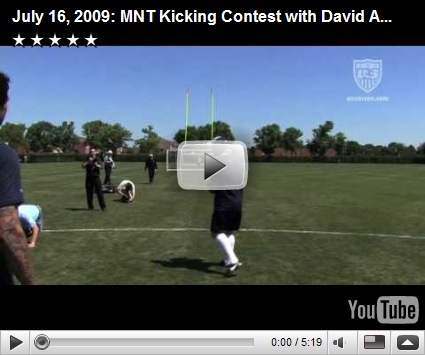
Football/Soccer & American Football: Philadelphia Eagles K, David Akers in a kicking competition with the U.S. Men’s National Team.

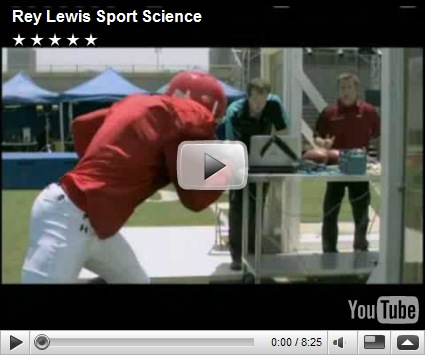
SWAT/American Football: Ray Lewis, SWAT and a door.

Navigating Nodes and Zones in THE GAME

BBQ
Photo courtesy of TaTu BBQ
Updated 5/15/10
The building blocks of THE GAME are nodes. The concept of the node has evolved over time, but the essence of the node and its role in THE GAME has not changed. In its most basic form, nodes are the individuals/groups, places, objects/things, ideas, traditions, discussions, created works, competitions, etc. that are found in cultures and remixed by those in the cultures. THE GAME borrows these nodes; reshaping or “tweaking” them to fit into, if not already, the context of a competition. Nodes enable groups and individuals to create and continually transform the content of THE GAME competition(s).

When an existing competitive or cultural node has been integrated into THE GAME, it is transformed into a GAME node (or G node) which can in turn be spun back into cultures for consumption and/or reintegrated into THE GAME. This process allows THE GAME to recombine and mashup its contents and perpetually reshape and transform itself.

On the surface, it seems THE GAME would be difficult to follow and participate in since it appears to be in a state of constant flux. However, THE GAME is like an expanding universe in that at its center are an interconnected network of known nodes and known G nodes that remain relatively unchanged (and have an established following). On the frontiers of the expanding universe, THE GAME can recombine its constituent nodes and/or create newer nodes and newer G nodes from existing nodes or nothing at all. People could choose to follow certain sections of the “established” GAME or follow the “fringes” of THE GAME where new nodes and G nodes are being developed and integrated.

In terms of participation, there are various GAME Types that one can participate in THE GAME. To summarize, there are five main GAME Types currently in use:

  1. Specific
  2. Transitional
  3. Grouped (style)
  4. Mixed: blended (hybrid) & linked
  5. Jacks

The following diagram visually depicts some of these GAME Types: some shapes represent specific nodes; others represent mixed nodes. A mixed node can be a blend of two or more separate nodes forming an entirely new blended node or a linked node consisting of two or more nodes that are not completely blended but exist in two forms simultaneously—their constituent nodes and the new node created by linking, but not completely integrating the constituent nodes (as represented by the dotted outlines of its constituent shapes). Enlarged view.

G-Types-diagram
Groups and individuals will most often focus their efforts and specialize on a particular part or parts of THE GAME. Others may choose to participate on the “expanding frontiers” of THE GAME, preferring the latest nodes being created. Others may choose to participate in a little of each in varying degrees. And then there are those, if resources are available, who may prefer to participate in the entire GAME. It is this flexibility for customization that enables THE GAME to have a broad appeal and be “everything to everyone”.

So what makes THE GAME unique beyond being a collection of nodes? Citing the previous example of THE GAME as an expanding universe, if the nodes and G nodes are the stars, planets, galaxies, etc., the physical spaces between the stars, planets, etc. are the zones—the physical and virtual spaces in THE GAME in which nodes can be connected or blended together in infinite ways. Referencing the figure above, the figure below (enlarged view) illustrates a section of the GAME ecosystem, with its various GAME Types represented by the different shapes that are blended, hybridized, grouped (by shape), etc.. The links and connections and the creation thereof, that occur in the the physical and virtual spaces between shapes (nodes) are what makes THE GAME more than a collection of nodes. What emerges instantly are links, connections, and blends from one node to many other nodes, to many other nodes, etc., forming an infinite network of interconnected competition nodes that form a larger omni-competition.

G-Ecosystem-diagram
So what actually is happening in the zones—the physical and virtual spaces between nodes to create these connections in THE GAME?

Let’s say, for instance, we want to borrow the following nodes and, if they aren’t already, place them into a competitive context:

  • football/soccer
  • baseball
  • BBQ
  • architecture
We are going to create a unique competition that strings, blends (hybridizes) or links these nodes together by utilizing the physical and virtual zones between them. So here is one way of creating a Game from these nodes:
  1. Indianapolis, IN. A football/soccer pitch is adjacent to a baseball field. One possible connection that can be made between these two nodes is as follows: Team A is at bat; the baseball outfield (a zone) opens up to the football pitch (another zone) lengthwise. The zone that physically connects the two nodes’ zones is a transition zone—a zone that facilitates the transition of action from one zone into and out of another. In what is essentially a pass, a hitter from Team A hits a pitch deep into the outfield, past Team B’s outfielder, and sets up Team A’s football midfielders, who will continue to press on toward the opposing team’s goal (this illustrates specific nodes that transition from one node to another; creating a linked node). Outfielders from Team B may periodically shadow Team A’s players on the pitch to help their teammates defend their side. The football match will not wait or stop for events to occur on the baseball diamond and vice versa. Both events will moving independently of each other until moments like above occur when multiple options may present for divergent flow of play in each node. Another option can have a zone physically located between the two nodes, within and/or adjacent to the two nodes whereby a (newly created) blended node with players on each side use a bat and their feet to advance a modified football towards the opposing goal.
  2. Dubai, UAE. An architecture firm (49% owned by Team A) enters an international competition (in which Team B is also participating) for a commercial project. Team A’s architecture firm presents its bid to the developers of the project in a conference room (a zone); the videoconference of Team A’s bid is shown to leadership, coaches, participants and spectators (via a big screen) in Indianapolis during the Game. A virtual connection exists between these nodes. A physical connection may exist as well if the pitch/baseball field are physically connected to other competitions, that are connected to other competitions, etc. all the way to Dubai.
  3. In the parking lot of the football pitch and baseball field (a zone), several tailgaters representing themselves and Team A or B are participating in a BBQ contest while the Game ensues. The contests categories will include: chicken, ribs and brisket. The spectators watching the Game and a panel of judges (whose points will be weighted more) will decide the winner of the contest. This is an instance where a specific node can simultaneously be a linked node.
The winner of this Game is determined by the total runs, goals, points, project dollar amount, etc. tallied by Team A versus Team B.

"Welcome to Monday Night Raw Nuggets"

Well...the scheduling conflict between Kroenke Sports Enterprises (owner of the Pepsi Center and the Denver Nuggets) and the WWE has finally reached a resolution and the WWE will move their May 25 Monday Night Raw show to the Staples Center in Los Angeles for back-to-back events.

I wish they would have run the two events at the same time. The evolution of the NBA towards more physical play could have served as a conduit in which the WWE or professional wrestling, for that matter, could have transitioned/blended into each other or could have formed a distinct hybrid GAME node altogether. It appears that WWE Chairman, Vince McMahon may have been thinking the same thing ...somewhat:

"McMahon revealed that in addition to WWE’s version of the Lakers’ bout with the Nuggets (a 10-Man Tag Match featuring Raw’s top Superstars), the Chairman will personally collide with E. Stanley Kroenke, live on an unforgettable Raw."

The NBA's Undercover Secret

A conduit in which American football (or any other code of football, for that matter) and basketball, specifically the NBA, can flow into each other--the physical play.

LeBron James Brings His Game to the Cleveland Browns

On January 18, 2009, LeBron James announced to the world that he would pursue "his first love" by signing a contract with the NFL's Cleveland Browns. Terms of the deal were not immediately disclosed. 
A source close to the negotiations revealed that James fought hard to maintain dual status in the NFL and NBA as a condition for his signing with the Browns. After difficult and protracted negotiations between James' NBA Cleveland Cavaliers and Browns, a settlement was reached between the two teams in the hopes that James' participation could foster further future interleague cooperation as well as accelerate the evolution and development of transitional GAME nodes between the sports of American football and basketball. 
In an unprecedented move for a currently active NBA player, James cited his desire to bring the NBA style of play to the NFL as his primary reason for signing with the Browns. Next season, it is expected that the Browns will utilize James' basketball skillset in American football at tight end and wide receiver as well as when the Browns are transitioning into their basketball package for THE GAME. While holding up his new Browns #23 jersey, a giddy James admitted to the gathered media that, "this all feels like a dream."

Nike Football: Leave Nothing

Shawne Merriman and Steven Jackson illustrate a hybrid G Type: specific (American football)+ transitional as they transition into different fields of play against different opposing teams in this "Nike Football: Leave Nothing" commercial directed by Michael Mann.
 

Connect with G.3

Node Universe

"i am not a cop" (1) 2009 (33) 2010 (24) 2011 (8) 2012 (6) 2016 olympics (1) a11 offense (1) AAFL (1) about THE GAME (44) aesthetics (1) alissa quart (1) alt rock (7) alternate universes (7) alternative hip hop (1) amber (1) american football (34) anderson (1) andres iniesta (1) anglican church (1) anthony bourdain (1) anthropology (1) antonio brown (1) apple (2) apple iphone 4 (1) archery (1) architecture (1) armin van buuren (1) army (1) arsenal (1) art (2) astronomy (1) athletics (2) atlanta falcons (1) atlanta thrashers (1) auburn tigers (1) australia wallabies (1) australian rules football (2) austus (1) aviation (1) babe didrikson zaharias (1) babylon 5 (1) bacary sagna (1) banking (1) barack obama (2) baseball (2) basketball (12) battles (1) battlestar galactica (1) beauty pageants (1) berrick barnes (1) big ten (3) bill goldberg (1) bill simmons (1) black headlines (1) blackberry (1) blackberry torch (1) bo jackson (2) bob hayes (1) bob sapp (1) boeing 787 dreamliner (1) books (13) boxing (2) bret michaels (1) brian boitano (1) brit rock (1) brooks orpik (1) business (7) calcio fiorentino (1) carol leifer (1) catholic church (1) celebrity apprentice (2) chad henne (1) charles woodson (1) charlie ward (1) chess (1) chess boxing (2) chevelle (1) chicago (band) (1) chicago blackhawks (1) chicago cubs (1) chicago white sox (1) child development (1) chris johnson (1) chrome browser (1) claudio reyna (1) cleveland browns (1) cleveland cavaliers (1) cloud computing (2) coachella (1) coldplay (1) college football (13) colorado avalanche (1) comic books (1) commercial (6) complementary currency (1) computer animation (1) corruption (1) cristiano ronaldo (1) culture (3) curtis stone (1) cyndi lauper (1) cypress hill (1) dance (16) darryl strawberry (1) dave winfield (1) david akers (1) david beckham (1) david sills (1) deion sanders (1) dell (1) denard robinson (2) dentistry (2) denver nuggets (1) depeche mode (1) derek jeter (1) deron williams (1) desmond howard (1) diagrams (3) didier drogba (1) digital and physical convergence (7) dmx (1) donald trump (1) downloads (1) dr. dre (1) drew brees (1) early humans (1) east coast rap (2) economics (1) electronic (15) electronics (9) endodontics (1) entertainment (42) entrepreneurship (2) entropia (1) erasure (1) espn (3) ethics (1) eurodance (5) evander kane (1) evanescence (1) evo 4g (1) fantasy (3) fernando torres (1) ferry corsten (1) fifa world cup (1) figure skating (1) fitness (1) flexbone (1) football (12) formations (6) free culture (1) fugoo (1) G (c.2000) (105) G Levels (6) G rules/guidelines (15) G Types (12) G: grouped (style) (4) G: jacks (1) G: mix (hybrid) (34) G: specific (60) G: transitional (21) G.3 (109) G.3 scenarios (3) gaelic football (3) galaxy (1) gatorade commercial (1) gavin floyd (1) gender (1) georgia tech yellowjackets (1) girl talk (1) goal line blitz (1) golf (1) good charlotte (1) google (4) google earth (1) gothic (1) gray headlines (2) gregg gillis (1) grunge (1) guiness book of world records (1) guru josh project (1) habbo hotel (1) haddaway (1) haka (1) halo (1) hardlinks (1) herschel walker (10) hierarchy (1) high school football (1) hilary levey friedman (1) hip hop (9) holly robinson peete (1) hollywood (2) hot stove league (1) house (3) house of pain (2) htc (1) hybrid G Types (12) hybrid sports (11) hype williams (1) hypertrophy (1) i-formation (1) ice hockey (5) indianapolis colts (1) institute for aesthletics (1) international rules football (4) internet (8) intro-inspection (1) ipad (1) jackie robinson (1) jamal lewis (1) jamelle holieway (1) jay walker (1) jay-z (1) jim brown (1) jim thorpe (1) joe decker (1) john elway (1) jose canseco (1) journalism (1) kaka (2) kaneva (1) kelis (1) keven mealamu (1) kevin kelly (1) kid muscle (1) kobe bryant (1) la bouche (1) la coka nostra (1) lane kiffin (1) LARP (1) laura kaeppeler (1) LBG (1) lebron james (1) life (1) linden labs (2) links (1) lionel messi (1) literature (1) logos (1) luciana (1) madonna (1) makkar ppm (1) malcolm glazer (1) manchester united (1) maps (1) maria kanellis (1) mark cuban (1) mashup (3) MCUIs (2) medicine (1) megaband (1) megasoccer (1) member stream (1) memory spot (1) mercury...the sport (1) meta browsing (2) meta layout (1) meta page (2) metal (3) metaverse (5) mia hamm (1) miami dolphins (1) michael bay (1) michael essien (1) michael jackson (1) michael johnson (1) michael mann (1) michael vick (1) michigan wolverines (5) mike tyson (1) military (2) mirror worlds (3) miss america (1) mlb (3) MMA (4) MMORPG (1) modern humans (1) montell jordan (1) moove (1) motorola (3) motorola atrix (1) motorola droid (1) motorola droid x (1) movies (2) ms virtual earth (1) multi-monitor productivity (2) multiverse (1) music (39) music videos (35) myron rolle (1) mytago (1) NAA (1) navy headlines (1) nba (8) nbc (4) NCAA (10) neanderthals (1) neuromuscular dentistry (1) new orleans saints (1) newspapers (1) nexus one (1) nfl (7) nhl (2) night ripper (1) nike (2) nintendo entertainment system (1) nirvana (1) no reservations (1) non phixion (1) notre dame (3) npr morning edition (1) nyc (1) nz all blacks (2) obscura visonaire interface (1) offense (5) ohio state buckeyes (4) on demand (1) onlive (1) open call (1) oregon ducks (2) oshiomogho atogwe (1) osymyso (1) ou sooners (1) outkast (1) palm (1) palm pre (1) pantera (1) pat white (2) patrick willis (1) paul johnson (1) pentagon (1) personalized search (1) peyton manning (1) pharao (1) phil mickelson (1) physiology (1) pittsburgh penguins (1) pittsburgh steelers (1) politics (2) pop (3) powerpop (1) premier league (1) presidential inauguration (1) pro wrestling (2) pro/NCAA hybrid (3) pros vs. joes (1) punk pop (1) QR codes (1) quantum physics (1) r and b (2) rap (9) ray lewis (1) reality TV (2) reggie bush (1) religion (1) restaurants (1) rewilding (1) rich rodriguez (2) richard belzer (1) richard vission (1) RIM (1) rio de janeiro (1) rob powell (1) rock (5) rod blagojevich (1) ruff ryders (1) rugby (4) rugby league (2) rugby union (3) run and shoot (1) ryan dempster (1) sash (1) sci-fi (3) science (8) scott mccarron (1) scott steiner (1) second life (2) sega joe montana football (1) selita ebanks (1) semantics (1) semapedia (1) shane o'brien (1) shaquille o'neal (1) sharon den adel (1) sharon osbourne (1) shawne merriman (1) showdown in chinatown (1) sinbad (1) site news (1) smartphones (3) snap (1) sociology (1) sonique (1) sound opinions (1) space (1) space travel (1) spacecraft (1) spider-man (1) spike tv (1) spirit (1) sports (65) sports science (1) spread option (2) stadiums (1) stan kroenke (1) stanley cup (1) star trek (1) star wars (2) starfruit (1) static revenger (1) steroids (2) steve clarkson (1) steve nash (1) steve sokol (1) steven gerrard (2) steven jackson (1) strategy (7) strength and conditioning (11) summer olympics (1) summer sanders (1) sun tzu (1) swat (1) synth pop (1) system of a down (1) taxonomy (2) tech (21) tecmo super bowl (1) TED (1) ted ginn jr. (1) ted lilly (1) terrell owens (2) the 80's (3) the 90's (23) the art of war (1) THE GAME gear (9) THE GAME in pictures (8) THE GAME in video (1) THE GAME training (12) THE GAME vision (110) the ideaboard (4) the ideaboard toolbar (1) the killers (1) the last of the mohicans (1) the national sports daily (1) the notorious b.i.g. (1) the prize (1) theater (1) there (1) tim donaghy (1) tim tebow (1) tina cousins (1) top 10 lists (2) trance (6) transformers (1) travel channel (1) triple option offense (1) troy polamalu (1) tupac shakur (2) TV (6) universal football (1) universal search (1) usability (1) usain bolt (1) usc trojans (4) USMNT (1) video games (2) vince carter (1) virtual economy (1) virtureality (6) vook (1) vss enterprise (1) wanderlei silva (1) wars (2) water polo (1) wayne rooney (1) wcw (1) wcw nitro (1) west coast rap (2) west virginia mountaineers (2) wiffle hurling (1) william orbit (1) winnipeg jets (1) wired magazine (1) wishbone offense (2) workouts (12) world fitness championship (1) world's fittest man (1) worlds crossover (5) wrestlemania (1) wwe (1) xavi (1) zones (3)

Popular Content on 'G.3 is...'

Home | About THE GAME (G.3) | About 'THE GAME (G.3) is...' | THE GAMEology | GWikipedia | THE IdeaBOARD

Copyright ©2012 THE GAME, G1, G.3, THE GAME Meta, G Meta, THEGAME-online.com and G1 Ventures. This work is licensed under aCreative Commons Attribution-ShareAlike 3.0 Unported License.Some rights reserved. This website is an unofficial and independent source of aggregated news, information, technologies, entertainment, created works and services, and is not affiliated, unless otherwise noted, with an individual, institution, or organization. The names of actual companies and products herein may be the trademarks of their respective owners. Portions of the content and products herein are copyrighted. Copyrights to these works belong to their respective rightsholders. The opinions expressed, and the products and advertisements placed on this website may not necessarily be endorsed by the aforementioned individuals, institutions or organizations.