Showing posts with label football. Show all posts

THE GAME In Pictures: Atlanta vs. Pittsburgh

G1_Pittsburgh_vs_Atlanta

In G.3, one of the many ways in which teams can be built is by combining professional, semi-professional or amateur teams from one city. How these teams interact with each other (if at all) in a GAME can vary widely.

On one end of the G.3 competition spectrum, one can find an alliance of teams representing a city; working together as a larger team but without direct interactions during the course of a GAME (at least on the field of play; however there will be interactions on a strategic and executive level to better coordinate the teams). Best described as “Games within THE GAME”, a GAME winner is determined by an aggregate score compiled from the constituent teams that form the larger team. These types of GAMEs would be ideally suited for G.3 enthusiasts who are node purists and who like to maintain a separation between nodes instead of direct interactions. For example:

G.3 Matchup: New York vs. Washington

Games  
New York Giants (NFL) 24 Washington Redskins (NFL) 21
New York Rangers (NHL) 3 Washington Capitals (NHL) 4
New York Mets (NL) 5 Washington Nationals (NL) 3
New York Red Bulls (MLS) 2 D.C. United (MLS) 2
New York Knicks (NBA) 105 Washington Wizards (NBA) 102
   
Winner: New York 139 Washington 132

On the other end of the G.3 competition spectrum, there are GAMEs that have many interactions between teams regardless of their node affiliation. Which brings us to the above image.

Inspired by the defense-offense transition formation, the compiled image above shows a G.3 matchup between teams from Pittsburgh and Atlanta. On the left is Pittsburgh Steelers safety Troy Polamalu wearing a Pittsburgh Steelers football kit (designed by Jimmy Nutini; see more of his crossover concepts here) playing the hybrid position of football fullback, rugby fullback and American football safety. Polamalu’s defense mates have stopped the opposing offense (note Atlanta Thrashers/Winnipeg Jets left wing Evander Kane transitioning to defense in the background) and his defense is now quickly transitioning to a multi-pronged offense (using multiple teams, fronts and balls simultaneously).

Playing deeper than Polamalu on the backline is a hybrid fullback (not pictured)—the last line of defense in this particular formation. A hybrid fullback must have the ability to play stout defense and take away the ball from the opposing teams’ forwards (regardless of nodes). A hybrid fullback must also, at times, be able to simultaneously receive and handle balls from allied teams, teammates and players outside/inside his nodes and zones; quickly distributing the balls in his possession to a vast array of forwards and backs. So it is easy to see why a hybrid fullback is an important catalyst in the defense-offense transition.

In the picture, a hybrid fullback has already passed the football to Polamalu, who is passing it further down the field to one of his forwards. At the same time and also pictured is Steelers punt returner Antonio Brown (84) streaking through Atlanta’s transition defense; pursued by members of the Atlanta Falcons punt coverage team. Also pictured is, in the foreground, Pittsburgh Penguins defenseman Brooks Orpik pushing forward to help with the offensive attack. The multiple balls and points of actions are used to illustrate the multilinear flow of some GAMEs. 

THE GAME In Pictures: Manchester United & Tampa Bay Buccaneers Host Arsenal & Colorado Avalanche at Old Trafford

GAME_ManU_Arsenal_Avs

In a previous post on THE IdeaBOARD, I proposed that there could be the potential for owners of multiple sports teams across many nodes to eventually consolidate their teams for the purpose of participating in GAMEs:

Although having multiple teams in different nodes sharing a single owner or ownership entity does not necessarily lead to cross-node GAME interactions of those teams, there are the right components and the right environment (a relatively slow worldwide economy with leagues and teams in many sports and markets struggling to remain competitive or viable) for a forward-thinking owner or fan base to seize an opportunity and enable initial interactions between nodes; eventually leading to something deeper and substantive esthetically (as new nodes are linked or blended, completely new nodes are generated) and financially (cross-branding takes on a deeper new meaning; disparate nodes are no longer solely linked by common values, demographics or financial opportunities, but are literally linked or blended together).

In the composite shot above, Manchester United midfielder Anderson fires the ball between Colorado Avalanche defenseman Shane O’Brien and a sliding Arsenal goalkeeper Wojciech SzczÄ™sny as Arsenal right-back Bacary Sagna looks on. Manchester United and the Tampa Bay Buccaneers are owned by Malcolm Glazer and his family. Stan Kroenke owns Arsenal and the Colorado Avalanche.

Integrating Multiple Nodes in THE GAME (G.3) Through Modules

modules

Modules by Sirous Namazi

Article courtesy of THE GAMEology

THE GAME (G.3) constantly changes and grows so it is helpful if as many of the components within G.3 and its derivatives maintain a degree of familiarity for its observers and more importantly its participants. Using modules may not be the most purely innovative route to creating Games, but it can get large parts of a Game up and running quickly while creating a sense of familiarity fans and participants may desire.

When creating a Game, a module can consist of any number of established nodes (in whole or in part) that have already been blended or linked together (nodes that have already been created, documented and are “familiar” to an established fanbase) and can be pieced together with other nodes or modules. Although certain aspects of a Game, specifically the new parts of a Game (in the zones, the virtual and physical spaces between nodes) that link the existing nodes or modules together, may be completely new and unfamiliar, using modules helps ensure that recurrent or familiar aspects of a Game are in place; making the blends, transitions or linkages between nodes or modules easy to visualize and follow (for fans and participants).

For example, when linking the nodes of water polo and association football, one can select modules consisting of individual players, a group of players, an entire side in or on the field of play or a specific rule from either node and then link these desired modules together through the actions of W players in the transitional zones—where multiple nodes intersect with each other. In this example, a W player near the edge of a football pitch wearing a hybrid uniform in the colors and design of his affiliated football side and water polo team would, according to G.3 rules, be allowed to move freely in a zone between the pitch and the pool; transitioning in and out of football and water polo as the flow of the two independently, but parallel running games would require. By utilizing this example of a system of linking nodes through W players, one can preserve the basic structure of the existing nodes, while deriving new and interesting extensions and at the same time create new connections to other nodes.

G.3 Scenarios: Kobe Bryant, Basketball, Football and Nodes in Between

When Kobe Bryant was six years old, his father, Joe “Jellybean” Bryant, moved the family to Italy to begin playing professional basketball. It was during these formative years in Italy that Kobe Bryant played football and basketball. When his father retired in 1991, Bryant’s family moved back to the United States, but his passion for football remained.

As a young fan of AC Milan, Bryant had aspirations of being a professional football player; even claiming that if his family had stayed in Italy, he would have chosen professional football over professional basketball. He remarked to the Milan sports daily, La Gazzetta dello Sport, during this summer’s World Cup in South Africa:

“I love soccer since the time I was a boy. From when I lived in Italy and supported AC Milan. Dreaming one day to be Marco Van Basten, one day Diego Maradona and one day Roberto Baggio.”

Byrant has more than just a passing appreciation of football and after these many years, he still feels at home on the pitch and with the football at his feet:


The 2010 NBA season begins tonight and there have been lingering concerns about Bryant’s surgically repaired left knee throughout this offseason. If Bryant could remain relatively healthy through the upcoming season and if he could endure a rigorous football training regimen, his size and athleticism would be an ideal template for a football goalie, backline defender or a forward on set pieces.

If Bryant was in his prime, it is likely that he could have played a center forward position given his athletic and attacking style of play; a style of play that has been very successful for him on a much smaller playing field—the basketball court.

Assuming that we have a Kobe Bryant in his prime, the thought of his potential role as a defenseman (D) or forward (F) in a blended football-basketball G node or a as transitional wing playmaker (W) between football and basketball nodes is tantalizing.

As a defenseman, Bryant, who is already an elite defender in the NBA, could fit in well is as a backline defender who can quickly counter and lead an offensive attack in a defense-offense transition formation (the middle of the three different formation modules bracketed in the diagram below). Given that Bryant’s main sport requires quick bursts of offense to defense and vice versa, his transition as a defender into an offensive catalyst in the defense-offense transition formations would be a relatively easy adjustment to make.

GAMEBlueFormation12

As a forward in the defense-offense transition formation in a blended G node, Bryant could slot into the left or right wings since he possesses the requisite skill set: very good speed, length, strength, long shooting range, passing and decision-making ability, and a strong defensive presence.

As a transitional wing player linking two or more nodes (football and basketball in this example) that are not completely blended but exist in two separate forms simultaneously, Bryant could transition into and out of football and basketball in some of the following ways:

  1. Shots made from specific spots on the basketball court could activate football set pieces for Bryant or another player to take during the next pause in football and basketball action.
  2. Long distance shots made from specific spots on the basketball court could award the football team on the same GAME team a man advantage on the pitch for a short finite period of time; much like man advantages in ice hockey.
  3. A G.3-designed field with a basketball court side by side with a football pitch would allow Bryant to concentrate on his basketball assignments while providing additional zonal marking on the pitch when he is in the corresponding basketball court-football pitch areas (by crossing over the sidelines and freely traversing into and out of the two fields of play as needed).

Elite G.3 performers must excel in multiple individual nodes while at the same time have the flexibility to excel in G nodes that link or blend two or more nodes together. Kobe Bryant may not be the young man he was half a decade ago, but his versatility, athleticism, intelligent play and competitive makeup continues to secure his status as one of the NBA’s and G.3’s elite.

The Top 10 of “ESPN’s Top 50 Players of the 2010 World Cup” and Their Roles in THE GAME

ESPN.com released its Top 50 Players of the 2010 World Cup yesterday and there were no surprises. While reading the players synopses and scouting reports we thought about how these players’ skills could be utilized in THE GAME and how new nodes could be built around their talents.

Transcribing ESPN.com’s rankings and comments, our analyses of the Top 10 football players in this year’s World Cup and their proposed roles in THE GAME can be found in red font.

1. Lionel Messi

Country: Argentina
Club Team: Barcelona
Position: Forward
Age: 22

Lionel Messi

NATIONAL TEAM: 41 appearances, 13 goals
WORLD CUP 2006: 3 app, 1 goal

Lionel Messi is the best pound-for-pound soccer player in the world, and perhaps of all time. At 22, Messi has won just about everything there is to win, both individually and in club soccer. Missing is any sort of hardware with Argentina, aside from an Olympic gold medal. Messi's game relies on its unpredictability and magnificent control of the ball, which seldom demurs to anything Messi asks it to do. Listed at a charitable 5-foot-7, he's even a good header. While transcendent with his club, Barcelona, in the last few years (his 17 goals this season are tied for the most in Spain), the knock on Messi has been that he doesn't match that dominance for Argentina. For the most part, this is blamed on Argentina manager Diego Maradona's refusal to deploy him in his natural position -- on the right, allowing him to cut in -- and posting him behind a deep striker instead. Maradona, one of the best of all time as a player, has named Messi his successor as Argentina's soccer savior, a label that has proved disastrous for all others so designated previously by Maradona.

Scouting thumbnail: Technical genius with a low center of gravity and pace who can break down any defense off the dribble and conjure something out of nothing (similar to a basketball point guard or B who, if eligible to do so, has the option of ball distribution responsibilities when he has broken into the second level of the defense). Struggles when used as a striker and prefers playing out wide and cutting in on his left foot (Messi would be best suited on the wide right wing as a SC/TWB and/or a transition player who can blend into another node that requires his skill set; such as a football forward on the right wing passing off to or transitioning into a QB/SC, the main signal caller and ball distributer for wing modules).

2. Cristiano Ronaldo

Country: Portugal
Club Team: Real Madrid
Position: Midfielder
Age: 25

Ronaldo

NATIONAL TEAM: 68 appearances, 22 goals
WORLD CUP 2006: 6 app, 1 goal

"Buy that kid," Manchester United players told manager Alex Ferguson after an 18-year old Cristiano Ronaldo dos Santos Aveiro, whose middle name allegedly honors Ronald Reagan, had torched Man U in a friendly in the summer of 2003. Ferguson obliged his players' wishes, shelling out some $20 million and handing Ronaldo the No. 7 jersey, previously worn by legends George Best, Bryan Robson, Eric Cantona and David Beckham. Ronaldo responded by outdoing all of the aforementioned in a six-year romp during which he scored 118 goals and won three Premier League titles, one Champions League and one Club World Cup, swiping 42 individual prizes, including the 2008 FIFA World Footballer of the Year, along the way. Last summer, Ferguson sold him to Real Madrid for a record $132 million. Ronaldo has become a lethal dribbler, superlative header and long-distance shooter and one of the better free-kick takers on the planet and will anchor an aging Portugal looking to shine one last time.

Scouting thumbnail: Explosive, pacy and an astonishingly prolific goal scorer for a winger (with his speed and explosiveness, Ronaldo would be a nice fit on the wings as a football attacker and/or the main playmaker in a wing module). Specializes in long-range free kicks and shows the ability to shoot from anywhere (Ronaldo’s strong accurate leg could also be utilized for long internodal passes in transition zones).

3. Wayne Rooney

Country: England
Club Team: Manchester United
Position: Forward
Age: 24

Rooney

NATIONAL TEAM: 57 appearances, 25 goals
WORLD CUP 2006: 4 app, 0 goals

When Wayne Rooney broke through internationally at just 17 years of age and took his place next to then-England striker Michael Owen, a British journalist referred to them as "the baby-faced assassin and the assassin-faced baby," with Rooney accounting for the less flattering of the descriptions. An England side without him has become unimaginable, as the Liverpool-born Rooney developed into a world-class striker in a country starved for them. The highly athletic Rooney has reinvented his position, swerving all over the attacking half of the field to drop back into midfield when needed or provide the final tap on a goal. With former teammate Cristiano Ronaldo now in Spain, Rooney has carried the scoring load for Man U, leading the Premier League with 23 goals. Rooney sports a tattoo that says, "Just Enough Education To Perform." While this may be generous, his on-field intelligence is off the charts. One half of another British power couple, Rooney and his wife Colleen have taken England by storm, he as a soccer player and she as a fitness guru/fashion commentator of some sort.

Scouting thumbnail: Complete striker who can play anywhere across the front three (Rooney’s power and playmaking ability are best suited for any node or transition module that requires an aggressive power forward in an attacking style of offense). Powerful build and aggressive attitude poses problems for any defense. Can score any type of goal and has improved his finishing skills.


4. Kaka

Country: Brazil
Club Team: Real Madrid
Position: Midfielder
Age: 27

Kaka

NATIONAL TEAM: 73 appearances, 26 goals
WORLD CUP 2002, 2006: 6 app, 1 goal

Kaka belongs to Jesus. The T-shirts he has shown underneath his jersey say so. An oxymoronic principled soccer player, Kaka also happens to be the rare Brazilian star who comes from an upper-middle-class background. Money couldn't tear him away from Milan and its fans. Kaka said he wasn't interested in the heaps of money offered him by Manchester City and Real Madrid. So long as Milan would have him, he would be staying. Milan needed his transfer fee to stay afloat though, so after Kaka won everything there is to win for club and self, Milan sold him to Real Madrid for about $95 million in June. So now Kaka also belongs to Real Madrid. Kaka has become a central figure in manager Dunga's new Brazil, masterminding its lethal counterattacks, which have made a Brazil team not as deep in world-class players as in past years still one of the world's best.

Scouting thumbnail: Knee injuries have sapped some of his speed and he no longer goes on galloping dribbles the entire length of the field. Artistic playmaker who can break down defenses via dribble or pass (Kaka’s ability to dribble across large portions of the field makes him a nice fit for positions that serve as transitional conduits into node positions that have a similar esthetic: basketball point guard, forechecking hockey defenseman/forward, American football kick/punt returner who regularly distributes or laterals the ball to teammates during the return).


5. Xavi

Country: Spain
Club Team: Barcelona
Position: Midfielder
Age: 30

Xavi

NATIONAL TEAM: 83 appearances, 8 goals
WORLD CUP 2002, 2006: 7 app, 0 goals

Every soccer team needs a Xavi, a savvy midfielder whose organizational skills are the glue that held both Barcelona and Spain together in their respective runs to glory. Along with Andres Iniesta he makes up the superb engine room for club and country, connecting the dots between those around him with his infallible short passes. The natural successor to Pep Guardiola, now Barcelona's manager, Xavi has been a mainstay in Barcelona's lineup since 1998 after joining the club's academy in 1991. With a contract running through 2014, he isn't liable to be leaving the only employer he has ever had anytime soon. His Player of the Tournament award for Spain's EURO 2008 triumph was justified. Perhaps the best illustration of the force that is Xavi was his performance against archrivals Real Madrid in May 2009, when he notched four assists in a 6-2 Barcelona win.

Scouting thumbnail: Intelligent playmaker who combines precise passes and artistic vision in both the final third and from a deep lying position. The pulse of the Spanish team. Superb ability to keep the ball (ideal SC).


6. Didier Drogba

Country: Ivory Coast
Club Team: Chelsea
Position: Forward
Age: 31

Drogba

NATIONAL TEAM: 65 appearances, 43 goals
WORLD CUP 2006: 2 app, 1 goal

When Chelsea splashed out $37 million for him in 2004, Didier Drogba seemingly came out of nowhere, uncommonly late in arriving on the world scene at 26. Now 31, he nonetheless has become one of the world's foremost strikers, and probably the most athletic one. Both captain and all-time leading scorer of Ivory Coast, he will be relied upon to debunk the stereotype that for all their ability, African teams never perform. This robust striker both takes up and covers a lot of real estate, often requiring several opposing defenders to keep him in check -- although Premier League opponents haven't been too successful at that this season, as Drogba ranks second to Wayne Rooney with 19 goals. Known for his big personality and intense looks, Drogba is spectacular to the eye.

Scouting thumbnail: Talismanic striker and physical specimen whose power makes him practically unplayable when he puts his mind to it. Can score all types of goals and excels as a lone front man (Drogba is best suited as a scoring center forward in nodes that utilize formations that place him on the frontlines; either directly behind, in front of, or within the line).


7. Andres Iniesta

Country: Spain
Club Team: Barcelona
Position: Midfielder
Age: 25

Iniesta

NATIONAL TEAM: 39 appearances, 6 goals
WORLD CUP 2006: 1 app, 0 goals

There's a reason they call him "El Illusionista" -- "The Illusionist." Andres Iniesta is a whimsical playmaker who transcends position and role to create a steady flow of chances for whoever is lucky enough to be playing in front of him. So multifunctional as to be capable of slotting into just about any midfield or attacking job, Iniesta is the creative counterpart to Xavi's pragmatism in Barcelona's and Spain's golden tandem. Coming up as Ronaldinho's understudy, Catalunya and all of Spain now shudder at the thought of life without Iniesta. Luckily, lithe as he may be, he has an uncanny ability to play through injury.

Scouting thumbnail: Small, technical playmaker with low center of gravity and tremendous ball control and creative vision, regarded by some peers as the best player in the world. Very difficult to dispossess and can also run at defenders and take them off the dribble. Sometimes overpasses when he should take the shot himself (Iniesta would be an ideal SC in a centrally positioned module that takes advantage of his vision and playmaking ability).

8. Fernando Torres

Country: Spain
Club Team: Liverpool
Position: Forward
Age: 25

Torres

NATIONAL TEAM: 71 appearances, 23 goals
WORLD CUP 2006: 4 app, 3 goals

Fernando Torres was born to score goals. He was converted from a goalkeeper to a striker at age 7 and scored 55 goals as a 10-year-old, which caught the attention of his beloved Atlético Madrid, which had relaunched its academy after disbanding it a few years earlier (sending superstar Raul into the arms of Real Madrid). The club wouldn't make that mistake a second time. Torres broke into Atlético's starting lineup at 17 and never did stop scoring goals, earning him a transfer to Liverpool in 2007. At 25, Torres, the embodiment of the modern striker, already has 132 competitive league goals under his belt.

Scouting thumbnail: Well-rounded, pacy striker with tremendous technique who draws much support as the best in the world. Likes to play off the shoulder of the last defender and can finish with aplomb with either foot and is also superb in the air. Can sometimes be thrown off his game if defenders dish out the rough treatment and the referees are lax in calling fouls. Similar to Didier Drogba, Torres fits best in an offense that uses a scoring center forward in nodes that utilize smaller speed formation modules and places him directly behind or on the frontline.


9. Steven Gerrard

Country: England
Club Team: Liverpool
Position: Midfielder
Age: 29

Gerrard

NATIONAL TEAM: 77 appearances, 16 goals
WORLD CUP 2006: 5 app, 2 goals

Dismissed as too slight for professional soccer as a child, Gerrard went on to be voted the second-best Liverpool player of all time by the club's fans and is even a Member of the Order of the British Empire. Several clubs passed on him when he was in his teens, before his hometown Liverpool finally committed to him. Regret it they did not, as Gerrard emerged as a superb attacking midfielder, who also operates as a second striker or as a winger. Gerrard is a nine-year veteran of England, pairing with Frank Lampard to form the best duo of attacking midfielders in the world.

Scouting thumbnail: Complete player who can play virtually anywhere on the field, but excels at club level with his own unique English interpretation of the trequartista role. Combines an explosive long-range shot with aggressive tackling, but struggles at times to shed man markers. As an aggressive defender and attacking midfielder, Gerrard would excel at multiple positions in the defense-offense transition formation module (behind the frontline or as a forward on either wing).


10. Michael Essien

Country: Ghana
Club Team: Chelsea
Position: Midfielder
Age: 27

Essien

NATIONAL TEAM: 74 appearances, 10 goals
WORLD CUP 2006: 3 app, 0 goals

An elite defensive midfielder who doesn't shy away from attacking, Ghana's Michael Essien is one of Africa's finest. With the help of fellow midfielders Sulley Muntari and Stephen Appiah, Essien led Ghana to the second round in Germany in 2006. Beating the Czech Republic 2-0 and the U.S. 2-1, Ghana's surprise run made it the only African country to survive the group stage. Essien, a two-time African Player of the Year, now has four more seasons as a regular at Chelsea under his belt. His versatility, energy and defensive pedigree make him one of the most consistent and reliable players in the world. Out since mid-January with a knee injury, Essien is expected to return by the World Cup but will need to prove he's fit.

Scouting thumbnail: The world's most dominant defensive midfielder. Covers an incredible amount of territory with boundless energy and the ability to contribute box to box. Possesses a powerful long-range shot. A lockdown defender with a powerful shot, Essien would excel as a defenseman in the defense-offense transition module; behind the line or in defensive modules that utilize a roaming defender behind a first line of defense.

See the rest of the ESPN.com Top 50 Players of the World Cup here.

THE GAME In Pictures: A Basic GAME Formation Action Shot #2

kaka G.3

The next image in our series of GAME action shots referencing our post on the first basic GAME formations, (module #1) power-speed formation, features Brazil National, Real Madrid midfielder and GAME SC Kaka. Using his size and pace, Kaka has broken through the first line of defenders; entering the defense’s second level. England National and Liverpool midfielder Steven Gerrard pursues while free safety Oshiomogho Atogwe (foreground) of the St. Louis Rams moves forward to help defend against Kaka’s penetration.

GAME Nuggets: Hybrid Nodes

Archery & American Football: New Orleans Saints QB, Drew Brees in an impressive display of accuracy.

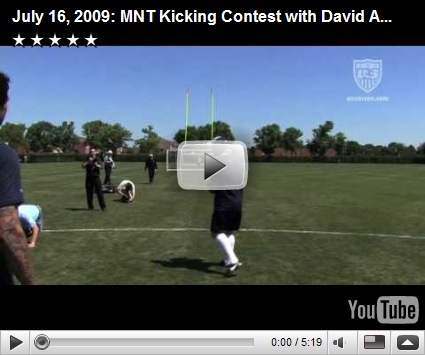
Football/Soccer & American Football: Philadelphia Eagles K, David Akers in a kicking competition with the U.S. Men’s National Team.

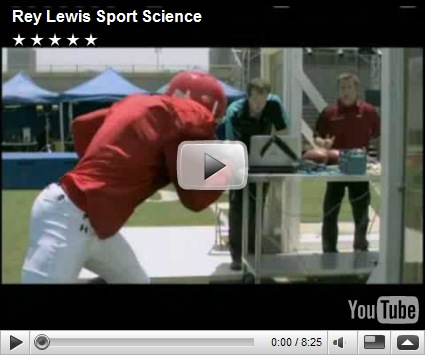
SWAT/American Football: Ray Lewis, SWAT and a door.

The NBA's Undercover Secret

A conduit in which American football (or any other code of football, for that matter) and basketball, specifically the NBA, can flow into each other--the physical play.

Showdown In Chinatown

Courtesy of Wikipedia


Showdown in Chinatown was a charity soccer match played on June 25, 2008, organized by Phoenix Suns point guard Steve Nash and New York Red Bulls footballer Claudio Reyna to benefit their respective charity foundations. The nine-a-side match was played at Nike Field in Sara D. Roosevelt Park on the Lower East Side of Manhattan, New York City, and the two teams included many National Basketball Association and international soccer players.

The Showdown in Chinatown is worth noting from the perspective of the G.3 since it displayed the football talents of NBA stars Steve Nash, Baron Davis, Jason Kidd, Raja Bell and Leandro Barbosa, as well as the talents of Marc Stein, senior NBA writer for ESPN.com. Their participation illustrated the promise and potential for specific sports and endeavors, however disparate, to be blended/transitioned into other sports and endeavors in the G.3.

Video update: 2009 Showdown in Chinatown (part 1 of 9)

Reggie Bush and David Beckham Demonstrate a "Transitional" GAME Moment

Football and American football are different sports requiring different skill sets and strategies for success. The premise for transitional GAME types is that there are multiple activities going on simultaneously. The primary purpose of this GAME type is to allow a smooth flow from one activity to another (to another, to another, etc.), therefore making THE GAME scalable and watchable. A prime example of how football and American football can transition and blend into each other in THE GAME can be found in the following videos featuring David Beckham and Reggie Bush, showing each participating in their opposite sport…

Calcio Fiorentino: The Most Brutal Sport On Earth

Courtesy of SI.com and Jeremy Kaufman of Bleacher Report

Part soccer, part rugby, part mixed martial arts, calcio fiorentino is a popular no-holds-barred game that is popular in Florence, Italy. First played in the 16th century, the sport has few rules and matches take place on a 100-by-50-meter sand pitch with goals running the width of the end zone. There are no timeouts or substitutions. It just might be the toughest and most brutal sport in the world.

There are 27 players on each side at any given time, and the objective is to score a goal; either by kicking or throwing the ball through the designated goal area. In addition, kicks to the face are forbidden. This is pretty much where the rules end.

Of the 27 players on each side, as many as ten of them are often considered brawlers. These players usually come from boxing, wrestling, and MMA backgrounds, and it is their job to essentially knock out the opponent. The brawlers from each side will usually ignore the whereabouts of the ball, and instead engage in combat with one another throughout the duration of the match.

The skill players on a calico fiorentino team generally consist of rugby and soccer players. The rugby players are typically utilized to carry the ball past the opposition, while the soccer players are there for tactical kicking and goal scoring. However, these players must avoid life-threatening attacks from the brawlers of the opposing team.

Hybrid Sports Created From Football, Rugby League

G.3 can take on an infinite number of development paths when its participants create, mix and remix nodes from the different domains. The following hybrid sports were proposed and/or created from various codes of football and rugby league before G.3 came into existence, but are examples of some specific directions G.3 can venture into:

Austus: Australian Rules Football + American Football

International Rules Football: Gaelic Football + Australian Rules Football

Universal Football: Australian Rules Football + Rugby League


Connect with G.3

Node Universe

"i am not a cop" (1) 2009 (33) 2010 (24) 2011 (8) 2012 (6) 2016 olympics (1) a11 offense (1) AAFL (1) about THE GAME (44) aesthetics (1) alissa quart (1) alt rock (7) alternate universes (7) alternative hip hop (1) amber (1) american football (34) anderson (1) andres iniesta (1) anglican church (1) anthony bourdain (1) anthropology (1) antonio brown (1) apple (2) apple iphone 4 (1) archery (1) architecture (1) armin van buuren (1) army (1) arsenal (1) art (2) astronomy (1) athletics (2) atlanta falcons (1) atlanta thrashers (1) auburn tigers (1) australia wallabies (1) australian rules football (2) austus (1) aviation (1) babe didrikson zaharias (1) babylon 5 (1) bacary sagna (1) banking (1) barack obama (2) baseball (2) basketball (12) battles (1) battlestar galactica (1) beauty pageants (1) berrick barnes (1) big ten (3) bill goldberg (1) bill simmons (1) black headlines (1) blackberry (1) blackberry torch (1) bo jackson (2) bob hayes (1) bob sapp (1) boeing 787 dreamliner (1) books (13) boxing (2) bret michaels (1) brian boitano (1) brit rock (1) brooks orpik (1) business (7) calcio fiorentino (1) carol leifer (1) catholic church (1) celebrity apprentice (2) chad henne (1) charles woodson (1) charlie ward (1) chess (1) chess boxing (2) chevelle (1) chicago (band) (1) chicago blackhawks (1) chicago cubs (1) chicago white sox (1) child development (1) chris johnson (1) chrome browser (1) claudio reyna (1) cleveland browns (1) cleveland cavaliers (1) cloud computing (2) coachella (1) coldplay (1) college football (13) colorado avalanche (1) comic books (1) commercial (6) complementary currency (1) computer animation (1) corruption (1) cristiano ronaldo (1) culture (3) curtis stone (1) cyndi lauper (1) cypress hill (1) dance (16) darryl strawberry (1) dave winfield (1) david akers (1) david beckham (1) david sills (1) deion sanders (1) dell (1) denard robinson (2) dentistry (2) denver nuggets (1) depeche mode (1) derek jeter (1) deron williams (1) desmond howard (1) diagrams (3) didier drogba (1) digital and physical convergence (7) dmx (1) donald trump (1) downloads (1) dr. dre (1) drew brees (1) early humans (1) east coast rap (2) economics (1) electronic (15) electronics (9) endodontics (1) entertainment (42) entrepreneurship (2) entropia (1) erasure (1) espn (3) ethics (1) eurodance (5) evander kane (1) evanescence (1) evo 4g (1) fantasy (3) fernando torres (1) ferry corsten (1) fifa world cup (1) figure skating (1) fitness (1) flexbone (1) football (12) formations (6) free culture (1) fugoo (1) G (c.2000) (105) G Levels (6) G rules/guidelines (15) G Types (12) G: grouped (style) (4) G: jacks (1) G: mix (hybrid) (34) G: specific (60) G: transitional (21) G.3 (109) G.3 scenarios (3) gaelic football (3) galaxy (1) gatorade commercial (1) gavin floyd (1) gender (1) georgia tech yellowjackets (1) girl talk (1) goal line blitz (1) golf (1) good charlotte (1) google (4) google earth (1) gothic (1) gray headlines (2) gregg gillis (1) grunge (1) guiness book of world records (1) guru josh project (1) habbo hotel (1) haddaway (1) haka (1) halo (1) hardlinks (1) herschel walker (10) hierarchy (1) high school football (1) hilary levey friedman (1) hip hop (9) holly robinson peete (1) hollywood (2) hot stove league (1) house (3) house of pain (2) htc (1) hybrid G Types (12) hybrid sports (11) hype williams (1) hypertrophy (1) i-formation (1) ice hockey (5) indianapolis colts (1) institute for aesthletics (1) international rules football (4) internet (8) intro-inspection (1) ipad (1) jackie robinson (1) jamal lewis (1) jamelle holieway (1) jay walker (1) jay-z (1) jim brown (1) jim thorpe (1) joe decker (1) john elway (1) jose canseco (1) journalism (1) kaka (2) kaneva (1) kelis (1) keven mealamu (1) kevin kelly (1) kid muscle (1) kobe bryant (1) la bouche (1) la coka nostra (1) lane kiffin (1) LARP (1) laura kaeppeler (1) LBG (1) lebron james (1) life (1) linden labs (2) links (1) lionel messi (1) literature (1) logos (1) luciana (1) madonna (1) makkar ppm (1) malcolm glazer (1) manchester united (1) maps (1) maria kanellis (1) mark cuban (1) mashup (3) MCUIs (2) medicine (1) megaband (1) megasoccer (1) member stream (1) memory spot (1) mercury...the sport (1) meta browsing (2) meta layout (1) meta page (2) metal (3) metaverse (5) mia hamm (1) miami dolphins (1) michael bay (1) michael essien (1) michael jackson (1) michael johnson (1) michael mann (1) michael vick (1) michigan wolverines (5) mike tyson (1) military (2) mirror worlds (3) miss america (1) mlb (3) MMA (4) MMORPG (1) modern humans (1) montell jordan (1) moove (1) motorola (3) motorola atrix (1) motorola droid (1) motorola droid x (1) movies (2) ms virtual earth (1) multi-monitor productivity (2) multiverse (1) music (39) music videos (35) myron rolle (1) mytago (1) NAA (1) navy headlines (1) nba (8) nbc (4) NCAA (10) neanderthals (1) neuromuscular dentistry (1) new orleans saints (1) newspapers (1) nexus one (1) nfl (7) nhl (2) night ripper (1) nike (2) nintendo entertainment system (1) nirvana (1) no reservations (1) non phixion (1) notre dame (3) npr morning edition (1) nyc (1) nz all blacks (2) obscura visonaire interface (1) offense (5) ohio state buckeyes (4) on demand (1) onlive (1) open call (1) oregon ducks (2) oshiomogho atogwe (1) osymyso (1) ou sooners (1) outkast (1) palm (1) palm pre (1) pantera (1) pat white (2) patrick willis (1) paul johnson (1) pentagon (1) personalized search (1) peyton manning (1) pharao (1) phil mickelson (1) physiology (1) pittsburgh penguins (1) pittsburgh steelers (1) politics (2) pop (3) powerpop (1) premier league (1) presidential inauguration (1) pro wrestling (2) pro/NCAA hybrid (3) pros vs. joes (1) punk pop (1) QR codes (1) quantum physics (1) r and b (2) rap (9) ray lewis (1) reality TV (2) reggie bush (1) religion (1) restaurants (1) rewilding (1) rich rodriguez (2) richard belzer (1) richard vission (1) RIM (1) rio de janeiro (1) rob powell (1) rock (5) rod blagojevich (1) ruff ryders (1) rugby (4) rugby league (2) rugby union (3) run and shoot (1) ryan dempster (1) sash (1) sci-fi (3) science (8) scott mccarron (1) scott steiner (1) second life (2) sega joe montana football (1) selita ebanks (1) semantics (1) semapedia (1) shane o'brien (1) shaquille o'neal (1) sharon den adel (1) sharon osbourne (1) shawne merriman (1) showdown in chinatown (1) sinbad (1) site news (1) smartphones (3) snap (1) sociology (1) sonique (1) sound opinions (1) space (1) space travel (1) spacecraft (1) spider-man (1) spike tv (1) spirit (1) sports (65) sports science (1) spread option (2) stadiums (1) stan kroenke (1) stanley cup (1) star trek (1) star wars (2) starfruit (1) static revenger (1) steroids (2) steve clarkson (1) steve nash (1) steve sokol (1) steven gerrard (2) steven jackson (1) strategy (7) strength and conditioning (11) summer olympics (1) summer sanders (1) sun tzu (1) swat (1) synth pop (1) system of a down (1) taxonomy (2) tech (21) tecmo super bowl (1) TED (1) ted ginn jr. (1) ted lilly (1) terrell owens (2) the 80's (3) the 90's (23) the art of war (1) THE GAME gear (9) THE GAME in pictures (8) THE GAME in video (1) THE GAME training (12) THE GAME vision (110) the ideaboard (4) the ideaboard toolbar (1) the killers (1) the last of the mohicans (1) the national sports daily (1) the notorious b.i.g. (1) the prize (1) theater (1) there (1) tim donaghy (1) tim tebow (1) tina cousins (1) top 10 lists (2) trance (6) transformers (1) travel channel (1) triple option offense (1) troy polamalu (1) tupac shakur (2) TV (6) universal football (1) universal search (1) usability (1) usain bolt (1) usc trojans (4) USMNT (1) video games (2) vince carter (1) virtual economy (1) virtureality (6) vook (1) vss enterprise (1) wanderlei silva (1) wars (2) water polo (1) wayne rooney (1) wcw (1) wcw nitro (1) west coast rap (2) west virginia mountaineers (2) wiffle hurling (1) william orbit (1) winnipeg jets (1) wired magazine (1) wishbone offense (2) workouts (12) world fitness championship (1) world's fittest man (1) worlds crossover (5) wrestlemania (1) wwe (1) xavi (1) zones (3)

Popular Content on 'G.3 is...'

Home | About THE GAME (G.3) | About 'THE GAME (G.3) is...' | THE GAMEology | GWikipedia | THE IdeaBOARD

Copyright ©2012 THE GAME, G1, G.3, THE GAME Meta, G Meta, THEGAME-online.com and G1 Ventures. This work is licensed under aCreative Commons Attribution-ShareAlike 3.0 Unported License.Some rights reserved. This website is an unofficial and independent source of aggregated news, information, technologies, entertainment, created works and services, and is not affiliated, unless otherwise noted, with an individual, institution, or organization. The names of actual companies and products herein may be the trademarks of their respective owners. Portions of the content and products herein are copyrighted. Copyrights to these works belong to their respective rightsholders. The opinions expressed, and the products and advertisements placed on this website may not necessarily be endorsed by the aforementioned individuals, institutions or organizations.