Showing posts with label G: mix (hybrid). Show all posts

THE GAME In Pictures: Manchester United & Tampa Bay Buccaneers Host Arsenal & Colorado Avalanche at Old Trafford

GAME_ManU_Arsenal_Avs

In a previous post on THE IdeaBOARD, I proposed that there could be the potential for owners of multiple sports teams across many nodes to eventually consolidate their teams for the purpose of participating in GAMEs:

Although having multiple teams in different nodes sharing a single owner or ownership entity does not necessarily lead to cross-node GAME interactions of those teams, there are the right components and the right environment (a relatively slow worldwide economy with leagues and teams in many sports and markets struggling to remain competitive or viable) for a forward-thinking owner or fan base to seize an opportunity and enable initial interactions between nodes; eventually leading to something deeper and substantive esthetically (as new nodes are linked or blended, completely new nodes are generated) and financially (cross-branding takes on a deeper new meaning; disparate nodes are no longer solely linked by common values, demographics or financial opportunities, but are literally linked or blended together).

In the composite shot above, Manchester United midfielder Anderson fires the ball between Colorado Avalanche defenseman Shane O’Brien and a sliding Arsenal goalkeeper Wojciech SzczÄ™sny as Arsenal right-back Bacary Sagna looks on. Manchester United and the Tampa Bay Buccaneers are owned by Malcolm Glazer and his family. Stan Kroenke owns Arsenal and the Colorado Avalanche.

THE GAME In Pictures: A Basic GAME Formation Featuring Denard Robinson and Pat White

BGF_Denard_Robinson-Pat_Whi

A previous post detailed the first basic GAME formation and suggested the ThB positions for dynamic football quarterbacks, Pat White from West Virginia University and Denard Robinson from the University of Michigan.

In G.3 the ThB can be best described as a mobile multi-nodal hybrid position whose primary role is that of a thrower and whose targets are players spanning multiple nodes. ThB’s can range from tall power throwers to relatively smaller, more explosive mobile throwers like White and Robinson.

The action shot above features an alternate reality in which Rich Rodriguez’s combined Michigan and West Virginia football spread option and GAME option attacks are advancing against a multi-team platoon that includes a squad of Ohio State defenders. Pat White (ThB) has just optioned the ball to Denard Robinson (ThB) after going through his throwing progressions on the wings (transition zones). Note White’s dirty uniform; a detail that reflects White’s transition from another node (played on natural grass) to his current node (played on FieldTurf).

Notre Dame On Ice: When Life Gives You Apples…

As a Michigan fan, I smile whenever I see Notre Dame’s iconic brand take a hit (like this). It’s even more delicious when the one inflicting the damage is Notre Dame herself.

Which leads me to this gem starting at 1:09. Note the dejected and sad gaze of the ND band as they play...

The confused reaction of those watching this amalgamation of live music (albeit good music by Chicago), figure skating and Notre Dame football indicates people may not be quite ready now for what G.3 will ultimately be. I am convinced, however, that G.3 can ably weave together the nodes we see in the video in a compelling and entertaining way without compromising the integrity of each individual node. In this example, the half-ass presentation of the Notre Dame football node helps kill this video on arrival. The lackadaisical skating, the horrendous choreography, the apathy of the ND band, the docile demonstration of the sport of football...

Need I go on?

If Notre Dame’s actual football players came out on skates and earnestly competed against another football team on skates, would it have made a difference? Very likely.

Regardless of whether it was a decision made by Notre Dame, Brian Boitano or Musselman’s Apple Sauce to marginalize and emasculate Notre Dame football in this way, internodal blending or linking fundamentally requires a respect for its constituent nodes. Chicago is doing what it does best—perform. Brian Boitano and friends are doing what they know best—perform. This is primarily why these two nodes complement and work well together. Notre Dame, on the other hand, had no shot from the very beginning. 

There is plenty of drama in a rugged and violent sport like football. People are always drawn to dramatic games and if constituent nodes are linked and blended with care and respect, the emotions that burgeon from the nodes of figure skating and music can complement and accentuate the drama that we see in football—whether it’s played on turf or on skates.

So I think I’ll give Notre Dame somewhat of a pass on this one. I’ll give them a 6.0 for the idea of reaching out to other athletic and entertainment nodes, but that’s about all I’m going to concede. I love G.3, but I’m still a Michigan fan.

G.3 Scenarios: Kobe Bryant, Basketball, Football and Nodes in Between

When Kobe Bryant was six years old, his father, Joe “Jellybean” Bryant, moved the family to Italy to begin playing professional basketball. It was during these formative years in Italy that Kobe Bryant played football and basketball. When his father retired in 1991, Bryant’s family moved back to the United States, but his passion for football remained.

As a young fan of AC Milan, Bryant had aspirations of being a professional football player; even claiming that if his family had stayed in Italy, he would have chosen professional football over professional basketball. He remarked to the Milan sports daily, La Gazzetta dello Sport, during this summer’s World Cup in South Africa:

“I love soccer since the time I was a boy. From when I lived in Italy and supported AC Milan. Dreaming one day to be Marco Van Basten, one day Diego Maradona and one day Roberto Baggio.”

Byrant has more than just a passing appreciation of football and after these many years, he still feels at home on the pitch and with the football at his feet:


The 2010 NBA season begins tonight and there have been lingering concerns about Bryant’s surgically repaired left knee throughout this offseason. If Bryant could remain relatively healthy through the upcoming season and if he could endure a rigorous football training regimen, his size and athleticism would be an ideal template for a football goalie, backline defender or a forward on set pieces.

If Bryant was in his prime, it is likely that he could have played a center forward position given his athletic and attacking style of play; a style of play that has been very successful for him on a much smaller playing field—the basketball court.

Assuming that we have a Kobe Bryant in his prime, the thought of his potential role as a defenseman (D) or forward (F) in a blended football-basketball G node or a as transitional wing playmaker (W) between football and basketball nodes is tantalizing.

As a defenseman, Bryant, who is already an elite defender in the NBA, could fit in well is as a backline defender who can quickly counter and lead an offensive attack in a defense-offense transition formation (the middle of the three different formation modules bracketed in the diagram below). Given that Bryant’s main sport requires quick bursts of offense to defense and vice versa, his transition as a defender into an offensive catalyst in the defense-offense transition formations would be a relatively easy adjustment to make.

GAMEBlueFormation12

As a forward in the defense-offense transition formation in a blended G node, Bryant could slot into the left or right wings since he possesses the requisite skill set: very good speed, length, strength, long shooting range, passing and decision-making ability, and a strong defensive presence.

As a transitional wing player linking two or more nodes (football and basketball in this example) that are not completely blended but exist in two separate forms simultaneously, Bryant could transition into and out of football and basketball in some of the following ways:

  1. Shots made from specific spots on the basketball court could activate football set pieces for Bryant or another player to take during the next pause in football and basketball action.
  2. Long distance shots made from specific spots on the basketball court could award the football team on the same GAME team a man advantage on the pitch for a short finite period of time; much like man advantages in ice hockey.
  3. A G.3-designed field with a basketball court side by side with a football pitch would allow Bryant to concentrate on his basketball assignments while providing additional zonal marking on the pitch when he is in the corresponding basketball court-football pitch areas (by crossing over the sidelines and freely traversing into and out of the two fields of play as needed).

Elite G.3 performers must excel in multiple individual nodes while at the same time have the flexibility to excel in G nodes that link or blend two or more nodes together. Kobe Bryant may not be the young man he was half a decade ago, but his versatility, athleticism, intelligent play and competitive makeup continues to secure his status as one of the NBA’s and G.3’s elite.

The Chicago CubsWhiteSoxBlackhawks

Blackhawks Cubs Sox

This past weekend, the Cubs and White Sox played the first half of their annual home and away Crosstown Classic at Wrigley Field. Since both Chicago teams have struggled mightily this season, much of the city’s attention was focused on the magical Stanley Cup run of the Blackhawks.

On Sunday, with red and white hockey sweaters interspersed with the blue and black jerseys in the stands, the Blackhawks were honored before the game (which also featured two no-hit bids into the seventh inning by the Cubs’ Ted Lilly and White Sox’ Gavin Floyd). The highlight had to be when all three teams posed for a picture around the Stanley Cup. It was a notably gracious gesture by the Blackhawks to let Cubs pitcher Ryan Dempster, a Canadian and a huge hockey fan, pose next to the Cup.

Dempster Blackhawks

When I first saw this picture, I wondered if three professional teams from at least two different sports have ever posed together on the same field wearing their uniforms.

It also made me think about the ways in which baseball and ice hockey could blend or at least link in deft ways (for example, starting points could include the catcher behind the plate who may need similar skill sets in stopping an errant pitch in the dirt as a hockey goalie would in stopping a low shot on net). Blending or linking two entirely different sports or nodes like baseball and ice hockey, played on two diametrically opposed surfaces, could be challenging, but the possibilities are nonetheless endless.

Feel free to share any of your ideas about building the Chicago Blackhawks-Cubs-White Sox or linking or blending baseball and ice hockey.

THE GAME in Pictures: Rugby Union + American Football Hybrid

Rugby Union-American Football Hybrid

Cleveland Browns & New Zealand All Blacks vs. San Francisco 49’ers & Australia Wallabies

During a 2009 Hybrid GAME matchup, the New Zealand All-Blacks’ hooker Keven Mealamu (center) breaks through the first line followed closely by Cleveland Browns running back Jamal Lewis (#31) as Australia Wallabies’ fly-half/inside centre Berrick Barnes (#12) and 49’ers' linebacker Patrick Willis (#52) close in to make the tackles.

The Top 10 of “ESPN’s Top 50 Players of the 2010 World Cup” and Their Roles in THE GAME

ESPN.com released its Top 50 Players of the 2010 World Cup yesterday and there were no surprises. While reading the players synopses and scouting reports we thought about how these players’ skills could be utilized in THE GAME and how new nodes could be built around their talents.

Transcribing ESPN.com’s rankings and comments, our analyses of the Top 10 football players in this year’s World Cup and their proposed roles in THE GAME can be found in red font.

1. Lionel Messi

Country: Argentina
Club Team: Barcelona
Position: Forward
Age: 22

Lionel Messi

NATIONAL TEAM: 41 appearances, 13 goals
WORLD CUP 2006: 3 app, 1 goal

Lionel Messi is the best pound-for-pound soccer player in the world, and perhaps of all time. At 22, Messi has won just about everything there is to win, both individually and in club soccer. Missing is any sort of hardware with Argentina, aside from an Olympic gold medal. Messi's game relies on its unpredictability and magnificent control of the ball, which seldom demurs to anything Messi asks it to do. Listed at a charitable 5-foot-7, he's even a good header. While transcendent with his club, Barcelona, in the last few years (his 17 goals this season are tied for the most in Spain), the knock on Messi has been that he doesn't match that dominance for Argentina. For the most part, this is blamed on Argentina manager Diego Maradona's refusal to deploy him in his natural position -- on the right, allowing him to cut in -- and posting him behind a deep striker instead. Maradona, one of the best of all time as a player, has named Messi his successor as Argentina's soccer savior, a label that has proved disastrous for all others so designated previously by Maradona.

Scouting thumbnail: Technical genius with a low center of gravity and pace who can break down any defense off the dribble and conjure something out of nothing (similar to a basketball point guard or B who, if eligible to do so, has the option of ball distribution responsibilities when he has broken into the second level of the defense). Struggles when used as a striker and prefers playing out wide and cutting in on his left foot (Messi would be best suited on the wide right wing as a SC/TWB and/or a transition player who can blend into another node that requires his skill set; such as a football forward on the right wing passing off to or transitioning into a QB/SC, the main signal caller and ball distributer for wing modules).

2. Cristiano Ronaldo

Country: Portugal
Club Team: Real Madrid
Position: Midfielder
Age: 25

Ronaldo

NATIONAL TEAM: 68 appearances, 22 goals
WORLD CUP 2006: 6 app, 1 goal

"Buy that kid," Manchester United players told manager Alex Ferguson after an 18-year old Cristiano Ronaldo dos Santos Aveiro, whose middle name allegedly honors Ronald Reagan, had torched Man U in a friendly in the summer of 2003. Ferguson obliged his players' wishes, shelling out some $20 million and handing Ronaldo the No. 7 jersey, previously worn by legends George Best, Bryan Robson, Eric Cantona and David Beckham. Ronaldo responded by outdoing all of the aforementioned in a six-year romp during which he scored 118 goals and won three Premier League titles, one Champions League and one Club World Cup, swiping 42 individual prizes, including the 2008 FIFA World Footballer of the Year, along the way. Last summer, Ferguson sold him to Real Madrid for a record $132 million. Ronaldo has become a lethal dribbler, superlative header and long-distance shooter and one of the better free-kick takers on the planet and will anchor an aging Portugal looking to shine one last time.

Scouting thumbnail: Explosive, pacy and an astonishingly prolific goal scorer for a winger (with his speed and explosiveness, Ronaldo would be a nice fit on the wings as a football attacker and/or the main playmaker in a wing module). Specializes in long-range free kicks and shows the ability to shoot from anywhere (Ronaldo’s strong accurate leg could also be utilized for long internodal passes in transition zones).

3. Wayne Rooney

Country: England
Club Team: Manchester United
Position: Forward
Age: 24

Rooney

NATIONAL TEAM: 57 appearances, 25 goals
WORLD CUP 2006: 4 app, 0 goals

When Wayne Rooney broke through internationally at just 17 years of age and took his place next to then-England striker Michael Owen, a British journalist referred to them as "the baby-faced assassin and the assassin-faced baby," with Rooney accounting for the less flattering of the descriptions. An England side without him has become unimaginable, as the Liverpool-born Rooney developed into a world-class striker in a country starved for them. The highly athletic Rooney has reinvented his position, swerving all over the attacking half of the field to drop back into midfield when needed or provide the final tap on a goal. With former teammate Cristiano Ronaldo now in Spain, Rooney has carried the scoring load for Man U, leading the Premier League with 23 goals. Rooney sports a tattoo that says, "Just Enough Education To Perform." While this may be generous, his on-field intelligence is off the charts. One half of another British power couple, Rooney and his wife Colleen have taken England by storm, he as a soccer player and she as a fitness guru/fashion commentator of some sort.

Scouting thumbnail: Complete striker who can play anywhere across the front three (Rooney’s power and playmaking ability are best suited for any node or transition module that requires an aggressive power forward in an attacking style of offense). Powerful build and aggressive attitude poses problems for any defense. Can score any type of goal and has improved his finishing skills.


4. Kaka

Country: Brazil
Club Team: Real Madrid
Position: Midfielder
Age: 27

Kaka

NATIONAL TEAM: 73 appearances, 26 goals
WORLD CUP 2002, 2006: 6 app, 1 goal

Kaka belongs to Jesus. The T-shirts he has shown underneath his jersey say so. An oxymoronic principled soccer player, Kaka also happens to be the rare Brazilian star who comes from an upper-middle-class background. Money couldn't tear him away from Milan and its fans. Kaka said he wasn't interested in the heaps of money offered him by Manchester City and Real Madrid. So long as Milan would have him, he would be staying. Milan needed his transfer fee to stay afloat though, so after Kaka won everything there is to win for club and self, Milan sold him to Real Madrid for about $95 million in June. So now Kaka also belongs to Real Madrid. Kaka has become a central figure in manager Dunga's new Brazil, masterminding its lethal counterattacks, which have made a Brazil team not as deep in world-class players as in past years still one of the world's best.

Scouting thumbnail: Knee injuries have sapped some of his speed and he no longer goes on galloping dribbles the entire length of the field. Artistic playmaker who can break down defenses via dribble or pass (Kaka’s ability to dribble across large portions of the field makes him a nice fit for positions that serve as transitional conduits into node positions that have a similar esthetic: basketball point guard, forechecking hockey defenseman/forward, American football kick/punt returner who regularly distributes or laterals the ball to teammates during the return).


5. Xavi

Country: Spain
Club Team: Barcelona
Position: Midfielder
Age: 30

Xavi

NATIONAL TEAM: 83 appearances, 8 goals
WORLD CUP 2002, 2006: 7 app, 0 goals

Every soccer team needs a Xavi, a savvy midfielder whose organizational skills are the glue that held both Barcelona and Spain together in their respective runs to glory. Along with Andres Iniesta he makes up the superb engine room for club and country, connecting the dots between those around him with his infallible short passes. The natural successor to Pep Guardiola, now Barcelona's manager, Xavi has been a mainstay in Barcelona's lineup since 1998 after joining the club's academy in 1991. With a contract running through 2014, he isn't liable to be leaving the only employer he has ever had anytime soon. His Player of the Tournament award for Spain's EURO 2008 triumph was justified. Perhaps the best illustration of the force that is Xavi was his performance against archrivals Real Madrid in May 2009, when he notched four assists in a 6-2 Barcelona win.

Scouting thumbnail: Intelligent playmaker who combines precise passes and artistic vision in both the final third and from a deep lying position. The pulse of the Spanish team. Superb ability to keep the ball (ideal SC).


6. Didier Drogba

Country: Ivory Coast
Club Team: Chelsea
Position: Forward
Age: 31

Drogba

NATIONAL TEAM: 65 appearances, 43 goals
WORLD CUP 2006: 2 app, 1 goal

When Chelsea splashed out $37 million for him in 2004, Didier Drogba seemingly came out of nowhere, uncommonly late in arriving on the world scene at 26. Now 31, he nonetheless has become one of the world's foremost strikers, and probably the most athletic one. Both captain and all-time leading scorer of Ivory Coast, he will be relied upon to debunk the stereotype that for all their ability, African teams never perform. This robust striker both takes up and covers a lot of real estate, often requiring several opposing defenders to keep him in check -- although Premier League opponents haven't been too successful at that this season, as Drogba ranks second to Wayne Rooney with 19 goals. Known for his big personality and intense looks, Drogba is spectacular to the eye.

Scouting thumbnail: Talismanic striker and physical specimen whose power makes him practically unplayable when he puts his mind to it. Can score all types of goals and excels as a lone front man (Drogba is best suited as a scoring center forward in nodes that utilize formations that place him on the frontlines; either directly behind, in front of, or within the line).


7. Andres Iniesta

Country: Spain
Club Team: Barcelona
Position: Midfielder
Age: 25

Iniesta

NATIONAL TEAM: 39 appearances, 6 goals
WORLD CUP 2006: 1 app, 0 goals

There's a reason they call him "El Illusionista" -- "The Illusionist." Andres Iniesta is a whimsical playmaker who transcends position and role to create a steady flow of chances for whoever is lucky enough to be playing in front of him. So multifunctional as to be capable of slotting into just about any midfield or attacking job, Iniesta is the creative counterpart to Xavi's pragmatism in Barcelona's and Spain's golden tandem. Coming up as Ronaldinho's understudy, Catalunya and all of Spain now shudder at the thought of life without Iniesta. Luckily, lithe as he may be, he has an uncanny ability to play through injury.

Scouting thumbnail: Small, technical playmaker with low center of gravity and tremendous ball control and creative vision, regarded by some peers as the best player in the world. Very difficult to dispossess and can also run at defenders and take them off the dribble. Sometimes overpasses when he should take the shot himself (Iniesta would be an ideal SC in a centrally positioned module that takes advantage of his vision and playmaking ability).

8. Fernando Torres

Country: Spain
Club Team: Liverpool
Position: Forward
Age: 25

Torres

NATIONAL TEAM: 71 appearances, 23 goals
WORLD CUP 2006: 4 app, 3 goals

Fernando Torres was born to score goals. He was converted from a goalkeeper to a striker at age 7 and scored 55 goals as a 10-year-old, which caught the attention of his beloved Atlético Madrid, which had relaunched its academy after disbanding it a few years earlier (sending superstar Raul into the arms of Real Madrid). The club wouldn't make that mistake a second time. Torres broke into Atlético's starting lineup at 17 and never did stop scoring goals, earning him a transfer to Liverpool in 2007. At 25, Torres, the embodiment of the modern striker, already has 132 competitive league goals under his belt.

Scouting thumbnail: Well-rounded, pacy striker with tremendous technique who draws much support as the best in the world. Likes to play off the shoulder of the last defender and can finish with aplomb with either foot and is also superb in the air. Can sometimes be thrown off his game if defenders dish out the rough treatment and the referees are lax in calling fouls. Similar to Didier Drogba, Torres fits best in an offense that uses a scoring center forward in nodes that utilize smaller speed formation modules and places him directly behind or on the frontline.


9. Steven Gerrard

Country: England
Club Team: Liverpool
Position: Midfielder
Age: 29

Gerrard

NATIONAL TEAM: 77 appearances, 16 goals
WORLD CUP 2006: 5 app, 2 goals

Dismissed as too slight for professional soccer as a child, Gerrard went on to be voted the second-best Liverpool player of all time by the club's fans and is even a Member of the Order of the British Empire. Several clubs passed on him when he was in his teens, before his hometown Liverpool finally committed to him. Regret it they did not, as Gerrard emerged as a superb attacking midfielder, who also operates as a second striker or as a winger. Gerrard is a nine-year veteran of England, pairing with Frank Lampard to form the best duo of attacking midfielders in the world.

Scouting thumbnail: Complete player who can play virtually anywhere on the field, but excels at club level with his own unique English interpretation of the trequartista role. Combines an explosive long-range shot with aggressive tackling, but struggles at times to shed man markers. As an aggressive defender and attacking midfielder, Gerrard would excel at multiple positions in the defense-offense transition formation module (behind the frontline or as a forward on either wing).


10. Michael Essien

Country: Ghana
Club Team: Chelsea
Position: Midfielder
Age: 27

Essien

NATIONAL TEAM: 74 appearances, 10 goals
WORLD CUP 2006: 3 app, 0 goals

An elite defensive midfielder who doesn't shy away from attacking, Ghana's Michael Essien is one of Africa's finest. With the help of fellow midfielders Sulley Muntari and Stephen Appiah, Essien led Ghana to the second round in Germany in 2006. Beating the Czech Republic 2-0 and the U.S. 2-1, Ghana's surprise run made it the only African country to survive the group stage. Essien, a two-time African Player of the Year, now has four more seasons as a regular at Chelsea under his belt. His versatility, energy and defensive pedigree make him one of the most consistent and reliable players in the world. Out since mid-January with a knee injury, Essien is expected to return by the World Cup but will need to prove he's fit.

Scouting thumbnail: The world's most dominant defensive midfielder. Covers an incredible amount of territory with boundless energy and the ability to contribute box to box. Possesses a powerful long-range shot. A lockdown defender with a powerful shot, Essien would excel as a defenseman in the defense-offense transition module; behind the line or in defensive modules that utilize a roaming defender behind a first line of defense.

See the rest of the ESPN.com Top 50 Players of the World Cup here.

Hybrid Nodes: Usain Bolt vs. Chris Johnson in the Context of THE GAME

Usain BoltChris Johnson


Updated 5/15/10

For a moment, it looked like this race would happen. But, apparently  a disagreement over the distance killed the proposed race between Jamaican Olympic sprinter and multiple world record holder Usain Bolt and Tennessee Titans running back Chris Johnson to determine the world’s fastest human; Johnson wanted to run 60 yards or less and Bolt wanted to run a longer race.

Bolt won three gold medals at the 2008 Summer Olympics in Beijing, setting world records in the 100 meters and 200 meters and sharing a third world record with the Jamaican 4x100 meter relay team. At last year's world championships, he shattered both of his own sprinting world records, running the 100 meters in 9.58 seconds and the 200 meters in 19.19 seconds. Bolt is widely considered the fastest man in the world…

Watch Usain run really fast.

Chris Johnson begs to differ.

During 2009, Johnson became the NFL's sixth 2,000-yard rusher when he completed his season with 2,006, breaking Earl Campbell's franchise record of 1,934. The second-year back from East Carolina also broke Marshall Faulk's NFL single-season record with 2,254 total yards from scrimmage.

At the 2008 NFL scouting combine, Johnson was timed in the 40 yard dash at 4.24 seconds -- the fastest time clocked at the combine that year.

Jimson Lee wrote a very interesting article in SpeedEndurance.com comparing the different physical demands of a 40 yard dash versus a 100 meter sprint and how one cannot just look at a sprinter’s split time to extrapolate their 40 time. Lee explains:

“In the 100m, you accelerate as long as possible to reach top speed, then maintain top speed. You want to cover the distance in the shortest possible time.

The 40 yard dash is similar:  your goal is to get to the 40 yard line as fast as possible from a motionless position. You have to overcome inertia, then reach top speed as fast as possible.

The “problem” is World class sprinters take longer to reach top speed because they have a longer acceleration phase.  (In reality, the “problem” is a nice thing to have, right?)

Novice 100m runners and female sprinters will reach their top speed sooner, so more of their race will be speed endurance (NOTE to Coaches – worry less about their reaction time and starting blocks, and focus on acceleration and speed endurance. Why work on improving 0.10 seconds when you can improve 1.0 seconds?)

It’s really unfair to use their actual 100 meter race splits and extrapolate their 40 yard dash time AS THEIR TRUE POTENTIAL. Why?  Because the extrapolated 40 yard dash time is merely an extrapolation or "split en route" to a 100 meters.

Everyone is familiar with the different phases of a 100 meter sprint:  reaction time, acceleration, transition, maintenance.

Based on the real splits, especially the 30-40m split where the 40 yard lies, they have yet to reach their top end speed.

But what would happen if they "trained seriously" for the event and reached their top speed earlier?

What if Ben Johnson or Usain Bolt trained to run the 40 yard dash (or 36.6 meter dash) as if it was a real event? Some Most football players treat the 40 yard dash as if it were a real event. A good or bad 40 yard dash time can make or break a football combine.

And finally, what if you subtracted 0.24 from their FAT time to downward convert it to a hand time?

We are looking at 3.9 to 4.0 hand time performances!

In my example, we are ASSUMING world class sprinters can reach top speed at 30m, and not between 50-60 meter mark.

(Editor’s note: “Ben”=Ben Johnson; “Carl”=Carl Lewis; “Mo”=Maurice Greene; “Tim”=Tim Montgomery; “Asafa”=Asafa Powell; etc.)

Fantasy League 40 yard dash for Ben Johnson Usain Bolt

Thus, to calculate a true 40 yard dash potential:

  • reaction time is not considered
  • the 0-10m segment is the same as the 100 meters (Phase 1)
  • the 10-20m segment is an average speed of the 10-30m segment in a 100m (Phase 2)
  • the 20-30m segment is an average speed of the 30-50m segment in a 100m (Phase 3)
  • the last 6 meter segment is a pro-rated speed of their top end speed (50-60m) in a 100m (Phase 4)

You can mix and match the distances and phases around to add up to 40 yards. The chart is a fun illustration for discussion purposes. If the 4 phases are equal, then I would calculate using 9.15m splits to equal 36.6 meters.”

GAME Context. So what is the point of going through this mental exercise of who is the fastest? I have to admit personal curiosity is a big reason. Most people I asked, wanted to see this race and it’s easy to see why.

Speed is a fundamental metric used when comparing athletes in almost any athletic endeavor; especially when comparing athletes from different sports. Theo Walcott could the fastest footballer in the world, but could he beat Bryan Habana, arguably the fastest rugby union player in the world? Could any of them beat Bolt or Chris Johnson? We don’t see athletes from different sports performing with or against each other, so fundamental questions like “who is the fastest athlete in the world” will always exist.

Addressing such questions is partly the reason why THE GAME matters.

There is no context nor platform that currently exists in which questions such as “who is the ___est” can be assessed, much less answered. The goal for THE GAME is to become a universal platform in which (at least in this example, athletic) talent can be compared to other talent no matter what the nodes are.

So, what are nodes? Here’s an excerpt from a previous article on the subject:

“The building blocks of THE GAME are nodes. The concept of the node has evolved over time, but the essence of the node and its role in THE GAME has not changed. In its most basic form, nodes are the individuals/groups, places, objects/things, ideas, traditions, discussions, created works, competitions, etc. that are found in cultures and remixed by those in the cultures. THE GAME borrows these nodes; reshaping or “tweaking” them to fit into, if not already, the context of a competition. Nodes enable groups and individuals to create and continually transform the content of THE GAME competition(s).

When an existing competitive or cultural node has been integrated into THE GAME, it is transformed into a GAME node (or G node) which can in turn be spun back into cultures for consumption and/or reintegrated into THE GAME. This process allows THE GAME to recombine and mashup its contents and perpetually reshape and transform itself.

On the surface, it seems THE GAME would be difficult to follow and participate in since it appears to be in a state of constant flux. However, THE GAME is like an expanding universe in that at its center are an interconnected network of known nodes and known G nodes that remain relatively unchanged (and have an established following). On the frontiers of the expanding universe, THE GAME can recombine its constituent nodes and/or create newer nodes and newer G nodes from existing nodes or nothing at all. People could choose to follow certain sections of the “established” GAME or follow the “fringes” of THE GAME where new nodes and G nodes are being developed and integrated….

A mixed node can be a blend of two or more separate nodes forming an entirely new blended (hybrid) node or a linked node consisting of two or more nodes that are not completely blended but exist in two simultaneous forms—their constituent nodes and the new node created by linking, but not completely integrating the constituent nodes (preserving the integrity of the constituent nodes).”

Using this framework of nodes and G nodes, in what ways can Usain Bolt, Chris Johnson, Theo Walcott, Bryan Habana and whomever else, “play together” or against each other by linking up, but not completely blending their respective nodes together?

Here’s a preliminary framework for one option using our, now familiar, American football and sprinting nodes:

1. sprint zones on the wings: running parallel to the football field lengthwise and on either side (wings) of the football field are sprint lanes (zones).

If a GAME team decides to score bonus points by utilizing its sprinters in the sprint zones on the wings, the football unit must time its play so a mesh point between a sprinter and football player is executed immediately after the sprinter crosses his sprint finish line, and while staying in his lane and maintaining top-end speed, receives the football (via a forward pass, handoff or pitch) or a baton in a 20 meter “catch zone”. For a sprinter to score for his GAME football team, he must cross the finish line of the “catch zone” first.

In this linked node, sprinters have a dual role in the sprint zones on the wings. Their man focus is winning their sprint race (and be the first person to cross the finish line); their secondary focus is to immediately transition into a receiver after crossing the finish line (and be the first person to cross the “catch zone” finish line) in order to score the maximum number of points for their GAME football team.

Each sprinter in the race is assigned points through a yet to be determined point value system that factors in the sprinter’s lane assignment (the further the sprint lane is from the football field the more points are awarded) and their personal “point index” (determined by a sprinter’s record for his sprint season). The winner of the race will give his GAME team the number of points determined by the point value system. The other sprinters in the race will serve as additional receiver options for the offensive team or sprint defenders (the sprinters defenders must stay in their lane and not interfere with catching the football, however). Pregame heats will determine the number of sprint receivers and sprint defenders the GAME teams will have in the sprint races on the wings.

2. sprint relays (transition from a football to a sprint relay baton): clearly marked and delineated inter-nodal transition zones between football fields and sprint tracks are positioned for 4 x 100 meter relays, 4 x 400 meter relays, 4 x 800 meter relays, etc. A sprinter will start with a baton in a relay race. Mesh points between sprinters and football wideouts, W or B will occur only on certain parts of the field of play. A team will therefore only have a limited number of opportunities to pull off the handoff between sprinting and football nodes. One scenario can be as follows:

-handoff #1: sprinter #2 enters an inter-nodal transition zone; on a predetermined playcall, the sprinter will drop the baton and take a football handoff from a streaking W or B. The proposed football, using an advanced computer chip and air cell technology, will transform its shape into a baton when in the transition zone. The defenders on the W or B on the field and transition zones are not allowed to defend against the sprinters (in other words impede their progress) in the sprint lanes. Only sprinters can be defenders against sprinters.

-handoff #2: sprinter #2 hands off the football baton to sprinter #3

-handoff #3: sprinter #4 takes the final handoff and streaks to the finish line. His sprint relay team must finish in the top three for his GAME football team to receive any points. The points awarded would be determined by the rules of the linked node.

The GAME flow in option one: Transitional handoffs to a sprinter are an opportunity to collect more points on the same drive for a GAME team. A GAME football team may decide to handoff to a GAME sprinter or a relay team who may ultimately finish first. The team represented by the winning sprinter(s) will be awarded the maximum points allowed for a successful transition. However, when a GAME team chooses to transition to a sprinter, its football team will lose a down and the football will be marked at the spot of the attempted transitional handoff. Even if its sprinters lose a race, the football team, assuming they are not out of downs, can continue its football drive from the point of the ball’s spot for points.

A sprint team’s goal is to finish first in their node race and then get points for their GAME team. The sprinter’s primary focus is his sprinting. If a transitional handoff fails between a sprinter and football player, the sprinter can remain alive in his race (if the football baton is dropped in the “transition zone” or “catch zone” the sprint race or sprint relay baton remains alive). The key: the SC, QB, ThB, W and/or B must hit the sprinter with a pass, handoff or pitch while the sprinter is in full stride.

The option one systems are perfect for sprinters with football backgrounds. Some notable athletes that could fit these types of systems include Ron Brown, Rocket Ismail, Herschel Walker, Willie Gault, Renaldo Nehemiah, Bob Hayes, Jim Thorpe, Sam Graddy and Ted Ginn, Jr..

Here’s option two still using our examples of American football and sprinting nodes:

Option two involves node mesh points between sprinters and football players without utilizing a direct exchange between these athletes. This is the preferred mode of exchange between sprinters and football players when the sprinter does not have a background in football.

One scenario can be as follows:

A football team scores a touchdown and now has several extra point options: attempt a 2 point conversion, kick an extra point or its sprinter wins a sprint contest to receive an additional 4 points (or however many points the particular linked node awards) to their total. When the offensive team scores a touchdown, the sprinters must get ready to race. The composition of the sprint field is determined by prerace/pregame heats. The scoring team may have as many as 3 (or as mentioned before, as many sprinters as the rules of a particular hybrid node allows) sprinters in the field. Each sprinter can only be used once in each quarter so a stable of sprinters should always be at the ready to keep everyone fresh. A team can have a certain number of sprinters representing them per event and the sprinters will go though prerace/pregame heats to determine how many will advance to the final heats 
(during the Game). The opposing team will have its sprinters go through the exact same process. The sprinting defenders will defend the 4 point conversion try by trying to win the sprint race. If the sprinters for the defending GAME team wins the race, the 4 point conversion attempt will have failed for the team scoring the touchdown and the scoring team will be awarded no extra points.

It is anticipated that GAME teams will be allowed a certain amount of salary space for their stable of sprinters. By having a salary cap, GAME teams with less capital can compete with GAME teams with more resources and prevent a small number of well financed teams from hording the world’s elite sprinters.

Option three could utilize “hot spots” located anywhere on the football field. Receivers must catch the football in these designated “hot spots” to have a chance for their sprinter(s) to run as in option two. To “activate” its sprinters, a GAME football team must hit a receiver in a “hot spot” and score on that same drive.

Remember this is only a preliminary framework of various options and more details will be needed to officially launch these Games. In related future posts we will include more diagrams, pictures and details outlining these options. In the meantime we will reference this post on THE IdeaBOARD for continued planning and discussion.

THE GAME In Pictures: A Basic GAME Formation Action Shot #2

kaka G.3

The next image in our series of GAME action shots referencing our post on the first basic GAME formations, (module #1) power-speed formation, features Brazil National, Real Madrid midfielder and GAME SC Kaka. Using his size and pace, Kaka has broken through the first line of defenders; entering the defense’s second level. England National and Liverpool midfielder Steven Gerrard pursues while free safety Oshiomogho Atogwe (foreground) of the St. Louis Rams moves forward to help defend against Kaka’s penetration.

THE GAME: THE GAME 2009

This is the week of the Michigan-Ohio State game.

Rated by ESPN in 2000 as the greatest sports rivalry in North America, there is perhaps no other rivalry in college sports that shares such a dysfunctional symbiosis. Characterized by fans who despise the other program while simultaneously maintaining a respect for their rival and the rich history of the conflict, this Saturday’s game in Ann Arbor will be the 106th meeting.

Some pregame hype ensues:

GO BLUE!

THE GAME In Pictures: A Basic GAME Formation Action Shot

tebow & williams

Using GIMP 2.6.6 and referencing this post, I remixed photographs of Tim Tebow and Deron Williams running the basic GAME formation: (module #1) power-speed formation. The image captures the moment after Deron Williams has passed the football to Tim Tebow; allowing Tebow to cross in front of Williams and look for a playmaker on the left wing. After the exchange, Williams begins to angle hard to his right, eluding his defender and creating space to either continue the play by himself, pass to another playmaker on the wing or handoff to a ThB charging from the rear.

A New Era for Auburn Football?

colonial_lowder On the one hand, Bobby Lowder was the founder and CEO of Colonial Bank, the former regional banking powerhouse and now a part of BB&T; on the other hand, he was the most powerful and influential trustee and booster at Auburn University.

He often mixed his two passions, blurring the line between his business and Auburn football.

Now that his bank is gone (the sixth largest bank failure in U.S. history and the largest bank failure of 2009) and his influence on the Board of Trustees at Auburn is diminished, many are wondering if there are better days ahead for Auburn University and Auburn football.

Fortune analyzes the man who many considered “the most feared, loathed, and…misunderstood men to wield power in [Alabama] since George Wallace”.

The First Basic GAME Formations, Circa 1999…Updated 2009, Part One

Back in 2000, I slotted, what were then, contemporary players into the various formation modules based on the players’ skill sets and what the positions’ requirements were. I thought it would be fun to revisit the first post about GAME formations by inserting today’s players into the formations while detailing the needs of each position some more. The following depth chart is for the power-speed formation module at the top of the diagram.

GAME-Blue-Formation-1

Module #1 power-speed formation depth chart:

SC:  Deron Williams (G, Utah Jazz), Kaká (MF, Real Madrid). This module’s position requires a strong decision maker with size, strength, quickness and the ability to distribute the ball precisely. The decisions that the SC make are based on the alignment and/or (expected) degree of penetration by the defense. Reacting to the defensive alignment, the SC will distribute the ball to the ThB’s in the rear, pass or lateral to the outside wings where wing playmakers (W) are aligned within separate wing modules, or keep the ball to achieve forward progress.

ThB: Tim Tebow (QB, University of Florida), Dan LeFevour (QB, Central Michigan University). This position requires a player who has the rare ability to accurately make all throws or kicks, run with elusiveness and run with power. Power is important in this position since the defense is aligned in close proximity. This ThB can either block/guard larger defenders, receive the ball and accurately distribute to ThB’s behind or to playmakers on the wings, or keep the ball to achieve forward progress.

ThB: Terrelle Pryor (QB, Ohio State University), Juice Williams (QB, University of Illinois), Dan Carter (Fly-half, USA Perpignan and the Crusaders). This position is similar to the ThB previously described, but throwing is not as essential of a requirement. The ability to pass or kick forward at this position is important in order to keep the defense off balance, but the majority of the time these ThB’s will keep the ball or distribute the ball laterally to a teammate. As a result, these ThB’s must have power, elusiveness and speed.

ThB: Boris Diaw (F/C, Charlotte Bobcats), Pau Gasol (C, Los Angeles Lakers). Diaw and Gasol are considered two of the best passing/outlet passing athletic big men in basketball. The primary physical attribute necessary for this position is size. As ThB’s are positioned further behind the frontline, visualizing the action on the field becomes more challenging. That is why it is necessary to have an excellent passing big man with good decision making skills positioned in the middle of the ThB formation to do the following: read the defensive formation and movement; analyze the progress of the ThB’s in the front (against the defense); adjust the call/play or continue with the planned call/play based on the two main reads; pass to the appropriate playmakers based on the reads.

ThB: Pat White (QB, Miami Dolphins), Seneca Wallace (QB, Seattle Seahawks). The next two rows of ThB’s are the best combination of speed, quickness and arm strength. Agile and elusive, these ThB’s can make plays with their game-breaking speed or with their arms. They can throw to playmakers positioned on the wings, launch balls to playmakers in other nodes or dart into/out of nodes by using their speed to slice through zones.

ThB: Michael Vick (QB, Philadelphia Eagles), Denard Robinson (QB, University of Michigan).

ThB: Donovan McNabb (QB, Philadelphia Eagles), Jay Cutler (QB, Chicago Bears. The next two rows of ThB’s have the best arms. This row has better movement and elusiveness than the following row; speed is not an essential attribute but a plus. The ability to throw the ball into other nodes and across zones is essential. Although these ThB’s may not have speed, they should have good lateral movement in order to laterally mirror the movements of ThB’s in the front rows (in the event ThB’s in front lateral, pass or kick to them) and the ability to laterally track the ThB’s behind them (in order to lateral, pass or kick to them).

…ThB: Ben Roethlisberger (QB, Pittsburgh Steelers), Ryan Mallett (QB, University of Arkansas). Also known as “Towers” or “Throwers”, these ThB’s have size, strength and superb arm strength. Their goal is to fire balls to participants in other nodes, across zones or on the wings: to transition play into other nodes and zones; to advance the offense in their own zone of play. They may not exactly mirror the movements of the ThB’s in the front rows, but they must remain in the zone of action in order to receive a lateral, pass or kick.

Blended Nodes: International Rules Football

Portions courtesy of Wikipedia

International rules football, a blended node consisting of Australian rules football and Gaelic football, was created to facilitate international representative matches between Australian rules football players and Gaelic football players. International rules football is one of the few team sports without any dedicated clubs or leagues and is usually contested by men’s, women’s and junior teams in tournaments and test matches.

A brief overview of International rules football rules as explained by Wikipedia:

“The rules are designed to provide a compromise between those of the two codes, with Gaelic football players being advantaged by the use of a round ball and a rectangular field (Australian rules uses an oval ball and field), while the Australian rules football players benefit from the opportunity to tackle between the shoulders and thighs, something banned in Gaelic football. The game also introduces the concept of the mark, from Australian rules football, with a free kick awarded for any ball caught from a kick of over 15 meters.

A player must bounce, solo or touch the ball on the ground once every 10 meters or six steps. A maximum of two bounces per possession are allowed, while players can solo the ball as often as they wish on a possession. Unlike in Gaelic football, the ball may be lifted directly off the ground, without putting a foot underneath it first. Players however cannot scoop the ball off the ground to a team-mate, nor pick up the ball if they are on their knees or on the ground. If a foul is committed, a free kick will be awarded, referees can give the fouled player advantage to play on at their discretion.

The game uses two large posts and two small posts, as in Australian rules, and a crossbar and goal net as in Gaelic football.

Points are scored as follows:

  • In the goal net (a goal): 6 points, umpire waves green flag and raises both index fingers.
  • Over the crossbar and between the two large posts (an over): 3 points, umpire waves red flag and raises one arm above his head.
  • Between a large post and a small post (a behind): 1 point, umpire waves white flag and raises one index finger.

Scores are written so as to clarify how many of each type of score were made as well as, like Australian football, giving the total points score for each team; for example, if a team scores one goal, four overs and 10 behinds, the score is written as 1-4-10 (28), meaning one goal (six points) plus 4 overs (4 × 3 = 12 points) plus 10 behinds (10 × 1 = 10 points), for a total score of 28 points.

An international rules match lasts for 72 minutes (divided into four quarters of 18 minutes each). Inter-county Gaelic football matches go on for 70 minutes, divided into two halves, and Australian rules matches consists of four 20 minutes quarters of game time, although with the addition of stoppage time, most quarters actually last between 25 and 30 minutes.

As in Gaelic football, teams consist of fifteen players, including a goalkeeper, whereas eighteen are used in Australian rules (with no keeper).”

Shot Blocking in Football

tony-gonzalez-dunk

There was an interesting post from Smart Football yesterday regarding whether it was legal for a defensive player to position himself in front of the goal posts during a long field goal attempt and block the field goal.

Alas the answer is no, but it is an interesting idea to incorporate into THE GAME and is one way to illustrate how football and basketball can blend, become a hybrid node, and/or transition into and out of each other.

The First Basic GAME Formations, Circa 1999

Below are diagrams of the first series of GAME formations (sketched between the brackets) I came up with back in 1999. Enlarge image. The brackets in the diagrams reflect the modularity of the formations; in other words one could use any one of the formations below to create completely new formations or integrate them into existing formations depending on how involved a GAME a team is participating in and/or what the team is trying to accomplish.
The three formation modules are, from top to bottom:
  1. a power-speed formation (the arrows that extend horizontally from “LINE” indicate that the line-forwards are positioned out in either direction without indicating the specific players or the spacing between them; the arrow that extends up from the “LINE” indicates that a forward push into the opposition is the goal of the line; the double-ended arrow between the Throwing Backs (ThB) at the bottom of the formation indicates that more players can be inserted in between the rear ThB’s, depending on the GAME and/or goal of the team). By positioning the SC (signal caller) close to the line followed by a “tail” of ThB’s, the SC becomes the initial ball handler who can either keep, hand off or lateral down the line of ThB’s (similar to the flow of rugby), depending on the defensive alignment and degree of defensive penetration. In general, ThB’s positioned towards the front are throwers with great size, mobility and generate considerable power when entering the frontline; ThB’s positioned in the middle are throwers who are elusive, and explosive; ThB’s in the rear are mobile, have good height and have the best power arms to deliver the ball downfield or into other transitional GAME zones. The rear ThB’s tend to be the least mobile of ThB’s and shadow the lateral movements of the ThB’s in front, in order to be in position to throw when required. This formation allows an offense to throw multiple looks simultaneously at a defense and then exploit the defenses’ weakest areas quickly and with forceful impact.
  2. a defense-offense transition formation is a defensive alignment module that creates quick transitions into attack mode through the utilization of quick strike power forwards on the wings and athletic power players with size and mobility in the middle of the defensive line. The three “bubbles” at the bottom of the module are a side in hockey, an American football offensive line and a American football/GAME hybrid backfield consisting of a QB, SC, TWB and B (more on these positions later). The “bubbles” illustrate how the forwards on the wings augment the defensive line but are versatile enough to sprint into the transitional GAME zones in all directions; linking up with and then participating in other (athletic) nodes. The defensive line’s main role is to provide a stiff resistance to counter offensive maneuvers, but like the forwards, the line has the flexibility to charge forward to participate in offensive operations. Behind the line are varying numbers of defenders (D) who are typically aligned in an I-formation. The D’s are primarily defensive safeties who are the key decision makers when leading a quick counterattack.
  3. a power-speed formation on the right wing with ThB’s stacked in a power formation upfront and speed ThB’s in the back. An extra layer of SC’s and B’s follow the ThB’s to create more power-speed combinations in the “tail” of the formation, producing more potential matchup problems for a defense.
Most positions have a corresponding athlete and the skill set (listed to the right of the athletes’ names) that I had in mind for the newly created GAME positions. The positions in the diagram may be unfamiliar to some, so a position index follows the diagram.
GAME-Blue-Formation-1

Position index for the preceding diagrams:

B=Back: is usually a multi-nodal hybrid position requiring quickness, speed, elusiveness and explosion. Because the B may usually be positioned further back in a given formation, endurance is a key element in the conditioning required for the position. A Back may in certain formations travel 15, 20 or more yards before hitting the frontline.

C=Center: a specific position from basketball, ice hockey and/or a football offensive line.

D=Defenseman: hockey defenseman providing a line of defense as well as lead a counterattack on a change of possession.

F=Forward: right wing or left wing in ice hockey, power or small forward in basketball. The F positions on the wings, in the middle formation module above, can be occupied by any type of forward from any athletic node as long as his skillset fits most of the requirements for the module’s position. Examples of forwards from the various athletic nodes who could fit in this defensive module include: Deion Sanders (CB/WR/KR/PR, American football), Roberto Carlos (wing back, football), Charles Woodson (CB/WR—in college/KR/PR), Scottie Pippen (SF, basketball), Ron Artest (F, basketball), Dwight Howard (C, basketball), Kevin Garnett (F, basketball), Lilian Thuram (centre back/right back, football), Cafu (wing back, football), Larry Robinson (D, ice hockey), Chris Chelios (D, ice hockey), Scott Stevens (D, ice hockey), Raymond Bourque (D, ice hockey), Bobby Orr (D, ice hockey), Claude Makélélé (defensive MF, football), and Hong Myung-Bo (sweeper, football). The F positions on the wings can also be multi-nodal hybrids.

G=Guard: football offensive lineman.

PF=Power Forward: basketball.

QB=Quarterback: football.

SC=Signal Caller: a hybrid multi-nodal position proficient in transitioning into and out of multiple nodes. A SC can, for example, start with a hockey line and/or receive a handoff from a football QB and stay in his node, transition into another node or distribute to another player from another node.

T=Tackle: football offensive lineman.

ThB=Throwing Back: a mobile multi-nodal hybrid position whose primary role is that of a thrower and whose targets are players spanning multiple nodes. ThB’s can range from tall power throwers to smaller, more explosively mobile throwers. and anything in between.

TWB=Throwing Wing Back: a multi-nodal hybrid player who can be positioned within a backfield formation or motioned/positioned to either wing. A versatile and athletic player, the ideal TWB can make throws between and within nodal zones, can catch/maintain possession, and can have tremendous explosiveness. The size of TWB can vary from tall and lanky, small and elusive, to anything in between, just as long as they have the above skillset.

Esthetics aside, the three GAME formations above were inspired by the University of Nebraska’s “I-option” attack, specifically; the I-formation, in general; and the hammer and anvil military tactical maneuver used in ancient battles and in modern frontline operations.
The I-formation was selected as a starting point for formations in THE GAME for several key reasons:

  1. The ability to have multiple options for a multiple number backs when they are attacking the frontline.
  2. Increased speed in hitting the frontline. The backs from the “tail” or rear will be able to read the defense with a running start when hitting the frontline. Conversely, backs towards the front can serve as quick hitting decoys, blockers, throwers, runners or a combination.
  3. Improved deception. The quick hitting action and the fact that the backs are lined up and virtually hidden by the backs in front, increases the ability of the offense to mask their intentions at the start of play and also increase the effectiveness of the subsequent “hammer and anvil” attack.

GAME Nuggets: Hybrid Nodes

Archery & American Football: New Orleans Saints QB, Drew Brees in an impressive display of accuracy.

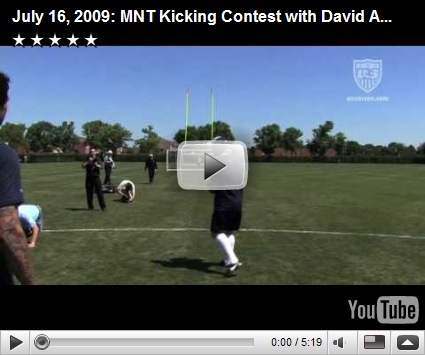
Football/Soccer & American Football: Philadelphia Eagles K, David Akers in a kicking competition with the U.S. Men’s National Team.

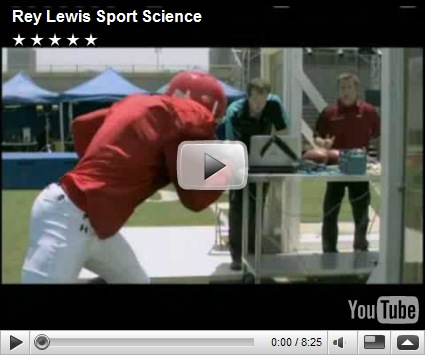
SWAT/American Football: Ray Lewis, SWAT and a door.


Connect with G.3

Node Universe

"i am not a cop" (1) 2009 (33) 2010 (24) 2011 (8) 2012 (6) 2016 olympics (1) a11 offense (1) AAFL (1) about THE GAME (44) aesthetics (1) alissa quart (1) alt rock (7) alternate universes (7) alternative hip hop (1) amber (1) american football (34) anderson (1) andres iniesta (1) anglican church (1) anthony bourdain (1) anthropology (1) antonio brown (1) apple (2) apple iphone 4 (1) archery (1) architecture (1) armin van buuren (1) army (1) arsenal (1) art (2) astronomy (1) athletics (2) atlanta falcons (1) atlanta thrashers (1) auburn tigers (1) australia wallabies (1) australian rules football (2) austus (1) aviation (1) babe didrikson zaharias (1) babylon 5 (1) bacary sagna (1) banking (1) barack obama (2) baseball (2) basketball (12) battles (1) battlestar galactica (1) beauty pageants (1) berrick barnes (1) big ten (3) bill goldberg (1) bill simmons (1) black headlines (1) blackberry (1) blackberry torch (1) bo jackson (2) bob hayes (1) bob sapp (1) boeing 787 dreamliner (1) books (13) boxing (2) bret michaels (1) brian boitano (1) brit rock (1) brooks orpik (1) business (7) calcio fiorentino (1) carol leifer (1) catholic church (1) celebrity apprentice (2) chad henne (1) charles woodson (1) charlie ward (1) chess (1) chess boxing (2) chevelle (1) chicago (band) (1) chicago blackhawks (1) chicago cubs (1) chicago white sox (1) child development (1) chris johnson (1) chrome browser (1) claudio reyna (1) cleveland browns (1) cleveland cavaliers (1) cloud computing (2) coachella (1) coldplay (1) college football (13) colorado avalanche (1) comic books (1) commercial (6) complementary currency (1) computer animation (1) corruption (1) cristiano ronaldo (1) culture (3) curtis stone (1) cyndi lauper (1) cypress hill (1) dance (16) darryl strawberry (1) dave winfield (1) david akers (1) david beckham (1) david sills (1) deion sanders (1) dell (1) denard robinson (2) dentistry (2) denver nuggets (1) depeche mode (1) derek jeter (1) deron williams (1) desmond howard (1) diagrams (3) didier drogba (1) digital and physical convergence (7) dmx (1) donald trump (1) downloads (1) dr. dre (1) drew brees (1) early humans (1) east coast rap (2) economics (1) electronic (15) electronics (9) endodontics (1) entertainment (42) entrepreneurship (2) entropia (1) erasure (1) espn (3) ethics (1) eurodance (5) evander kane (1) evanescence (1) evo 4g (1) fantasy (3) fernando torres (1) ferry corsten (1) fifa world cup (1) figure skating (1) fitness (1) flexbone (1) football (12) formations (6) free culture (1) fugoo (1) G (c.2000) (105) G Levels (6) G rules/guidelines (15) G Types (12) G: grouped (style) (4) G: jacks (1) G: mix (hybrid) (34) G: specific (60) G: transitional (21) G.3 (109) G.3 scenarios (3) gaelic football (3) galaxy (1) gatorade commercial (1) gavin floyd (1) gender (1) georgia tech yellowjackets (1) girl talk (1) goal line blitz (1) golf (1) good charlotte (1) google (4) google earth (1) gothic (1) gray headlines (2) gregg gillis (1) grunge (1) guiness book of world records (1) guru josh project (1) habbo hotel (1) haddaway (1) haka (1) halo (1) hardlinks (1) herschel walker (10) hierarchy (1) high school football (1) hilary levey friedman (1) hip hop (9) holly robinson peete (1) hollywood (2) hot stove league (1) house (3) house of pain (2) htc (1) hybrid G Types (12) hybrid sports (11) hype williams (1) hypertrophy (1) i-formation (1) ice hockey (5) indianapolis colts (1) institute for aesthletics (1) international rules football (4) internet (8) intro-inspection (1) ipad (1) jackie robinson (1) jamal lewis (1) jamelle holieway (1) jay walker (1) jay-z (1) jim brown (1) jim thorpe (1) joe decker (1) john elway (1) jose canseco (1) journalism (1) kaka (2) kaneva (1) kelis (1) keven mealamu (1) kevin kelly (1) kid muscle (1) kobe bryant (1) la bouche (1) la coka nostra (1) lane kiffin (1) LARP (1) laura kaeppeler (1) LBG (1) lebron james (1) life (1) linden labs (2) links (1) lionel messi (1) literature (1) logos (1) luciana (1) madonna (1) makkar ppm (1) malcolm glazer (1) manchester united (1) maps (1) maria kanellis (1) mark cuban (1) mashup (3) MCUIs (2) medicine (1) megaband (1) megasoccer (1) member stream (1) memory spot (1) mercury...the sport (1) meta browsing (2) meta layout (1) meta page (2) metal (3) metaverse (5) mia hamm (1) miami dolphins (1) michael bay (1) michael essien (1) michael jackson (1) michael johnson (1) michael mann (1) michael vick (1) michigan wolverines (5) mike tyson (1) military (2) mirror worlds (3) miss america (1) mlb (3) MMA (4) MMORPG (1) modern humans (1) montell jordan (1) moove (1) motorola (3) motorola atrix (1) motorola droid (1) motorola droid x (1) movies (2) ms virtual earth (1) multi-monitor productivity (2) multiverse (1) music (39) music videos (35) myron rolle (1) mytago (1) NAA (1) navy headlines (1) nba (8) nbc (4) NCAA (10) neanderthals (1) neuromuscular dentistry (1) new orleans saints (1) newspapers (1) nexus one (1) nfl (7) nhl (2) night ripper (1) nike (2) nintendo entertainment system (1) nirvana (1) no reservations (1) non phixion (1) notre dame (3) npr morning edition (1) nyc (1) nz all blacks (2) obscura visonaire interface (1) offense (5) ohio state buckeyes (4) on demand (1) onlive (1) open call (1) oregon ducks (2) oshiomogho atogwe (1) osymyso (1) ou sooners (1) outkast (1) palm (1) palm pre (1) pantera (1) pat white (2) patrick willis (1) paul johnson (1) pentagon (1) personalized search (1) peyton manning (1) pharao (1) phil mickelson (1) physiology (1) pittsburgh penguins (1) pittsburgh steelers (1) politics (2) pop (3) powerpop (1) premier league (1) presidential inauguration (1) pro wrestling (2) pro/NCAA hybrid (3) pros vs. joes (1) punk pop (1) QR codes (1) quantum physics (1) r and b (2) rap (9) ray lewis (1) reality TV (2) reggie bush (1) religion (1) restaurants (1) rewilding (1) rich rodriguez (2) richard belzer (1) richard vission (1) RIM (1) rio de janeiro (1) rob powell (1) rock (5) rod blagojevich (1) ruff ryders (1) rugby (4) rugby league (2) rugby union (3) run and shoot (1) ryan dempster (1) sash (1) sci-fi (3) science (8) scott mccarron (1) scott steiner (1) second life (2) sega joe montana football (1) selita ebanks (1) semantics (1) semapedia (1) shane o'brien (1) shaquille o'neal (1) sharon den adel (1) sharon osbourne (1) shawne merriman (1) showdown in chinatown (1) sinbad (1) site news (1) smartphones (3) snap (1) sociology (1) sonique (1) sound opinions (1) space (1) space travel (1) spacecraft (1) spider-man (1) spike tv (1) spirit (1) sports (65) sports science (1) spread option (2) stadiums (1) stan kroenke (1) stanley cup (1) star trek (1) star wars (2) starfruit (1) static revenger (1) steroids (2) steve clarkson (1) steve nash (1) steve sokol (1) steven gerrard (2) steven jackson (1) strategy (7) strength and conditioning (11) summer olympics (1) summer sanders (1) sun tzu (1) swat (1) synth pop (1) system of a down (1) taxonomy (2) tech (21) tecmo super bowl (1) TED (1) ted ginn jr. (1) ted lilly (1) terrell owens (2) the 80's (3) the 90's (23) the art of war (1) THE GAME gear (9) THE GAME in pictures (8) THE GAME in video (1) THE GAME training (12) THE GAME vision (110) the ideaboard (4) the ideaboard toolbar (1) the killers (1) the last of the mohicans (1) the national sports daily (1) the notorious b.i.g. (1) the prize (1) theater (1) there (1) tim donaghy (1) tim tebow (1) tina cousins (1) top 10 lists (2) trance (6) transformers (1) travel channel (1) triple option offense (1) troy polamalu (1) tupac shakur (2) TV (6) universal football (1) universal search (1) usability (1) usain bolt (1) usc trojans (4) USMNT (1) video games (2) vince carter (1) virtual economy (1) virtureality (6) vook (1) vss enterprise (1) wanderlei silva (1) wars (2) water polo (1) wayne rooney (1) wcw (1) wcw nitro (1) west coast rap (2) west virginia mountaineers (2) wiffle hurling (1) william orbit (1) winnipeg jets (1) wired magazine (1) wishbone offense (2) workouts (12) world fitness championship (1) world's fittest man (1) worlds crossover (5) wrestlemania (1) wwe (1) xavi (1) zones (3)

Popular Content on 'G.3 is...'

Home | About THE GAME (G.3) | About 'THE GAME (G.3) is...' | THE GAMEology | GWikipedia | THE IdeaBOARD

Copyright ©2012 THE GAME, G1, G.3, THE GAME Meta, G Meta, THEGAME-online.com and G1 Ventures. This work is licensed under aCreative Commons Attribution-ShareAlike 3.0 Unported License.Some rights reserved. This website is an unofficial and independent source of aggregated news, information, technologies, entertainment, created works and services, and is not affiliated, unless otherwise noted, with an individual, institution, or organization. The names of actual companies and products herein may be the trademarks of their respective owners. Portions of the content and products herein are copyrighted. Copyrights to these works belong to their respective rightsholders. The opinions expressed, and the products and advertisements placed on this website may not necessarily be endorsed by the aforementioned individuals, institutions or organizations.